Alternate Frequency Pinger
.jpeg?1778775537)
Alternate Frequency Pinger
.jpg?1778775538)
Alternate Frequency Pinger
.jpeg?1778775538)
Alternate Frequency Pinger
Alternate Frequency Pinger
.jpeg?1778775539)
Alternate Frequency Pinger
Alternate Frequency Pinger
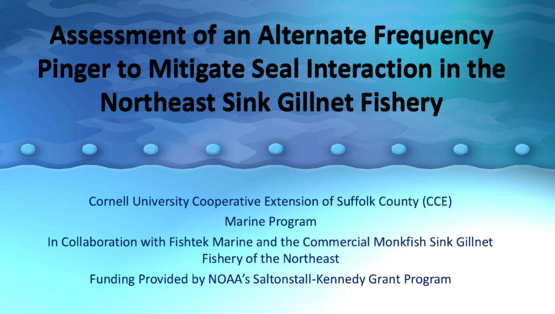
Assessment of an Alternate Frequency Pinger to Mitigate Gray Seal Interaction in the Northeast Sink Gillnet
Project Funded through NOAA’s Saltonstall Kennedy Grant Program
Priority Addressed Priority #2 – Science or Technology that Promotes Sustainable U.S. Seafood Production and Harvesting
This collaborative project, between CCE, NOAA scientists, commercial gillnet fishermen and fishing gear designers will assess the efficacy of a new acoustic device to reduce seal bycatch in the Northeast sink gillnet fishery. The acoustic device or pinger tested during this study will focus on reducing gray seal bycatch while maintaining reduced harbor porpoise interactions with gillnets. The “Seal Safe” pinger will be tested against currently regulated pingers required in the Northeast sink gillnet fishery. Paired sea trials will occur aboard commercial fishing vessels from Montauk, NY during the spring and fall monkfish season.
To monitor and maintain porpoise bycatch reduction a second research component will be performed using Passive Acoustic Monitoring (PAM). The PAM component will validate the “Seal Safe” pingers effectiveness to sustain reduced porpoise interaction with sink gillnets and test any potential impacts of habituation and ensonification. Successful bycatch reduction determination of the “Seal Safe” pinger will create an effective tool for gillnet fisheries to improve fishing practices, reduce interaction with protected species, and maintain sustainable fisheries.
Preliminary passive acoustic monitoring conducted near Fishers Island using F-POD hydrophones showed promising results, with harbor porpoise detections reduced by approximately 76% during periods when the acoustic deterrent device was active. These findings support the potential for alternate frequency pingers to provide an effective, non-lethal bycatch reduction tool for Northeast gillnet fisheries.
This project proposes to directly inform management and offer this gear modification as a tool for reducing bycatch of both seals and porpoise in sink gillnet fisheries and promoting sustainable gillnet fisheries. Data will provide insight to managers and industry. It will produce a tool that is industry tested, peer-reviewed, and easily adoptable into fishery regulation and commercial fishing industry use. This project will directly benefit the fishing community in strengthening sustainable harvesting methods.
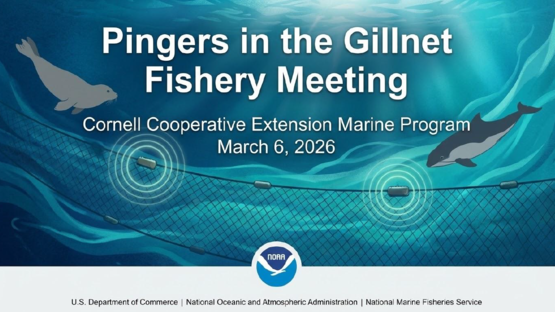
Pinger Workshop Slideshow - Mitigate Seal Interaction
Pingers in the Gillnet Fishery - Harbor Porpoise Population Summary
Contact
Tara McClintock
Fisheries Specialist
taf4@cornell.edu
631-727-7850 x 11317
Last updated June 8, 2026