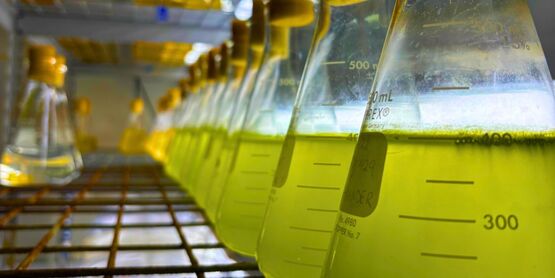
Algae cultures
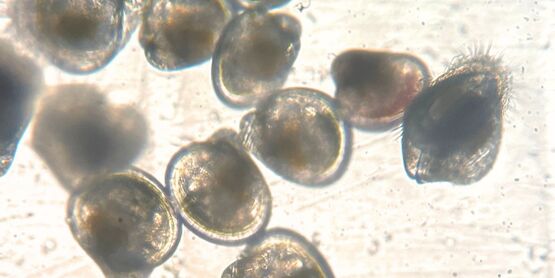
Oyster larvae under the microscope
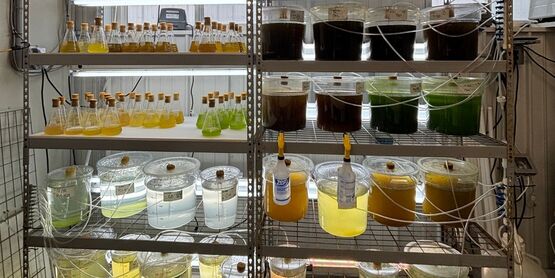
Algae cultures
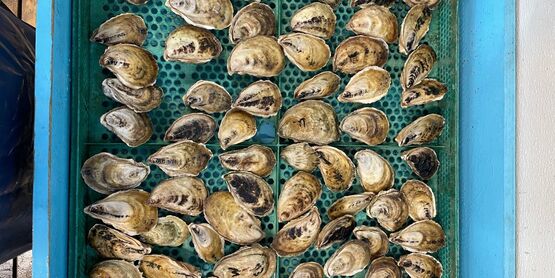
Eastern oysters conditioning for spawning
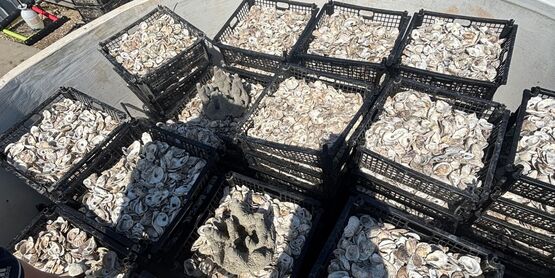
Oyster shell prepared for setting spat-on-shell
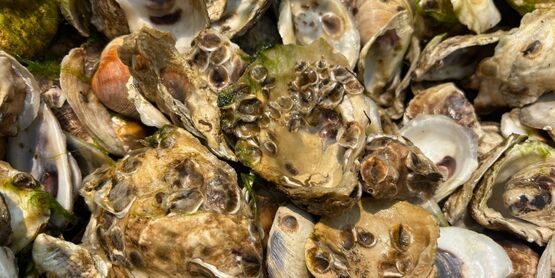
Spat-on-shell
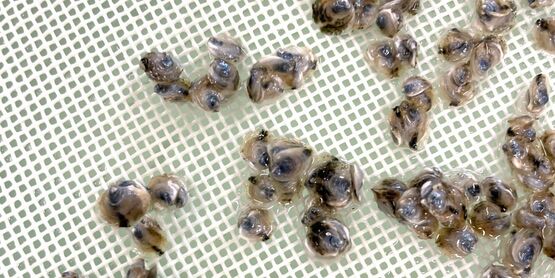
Single seed oysters
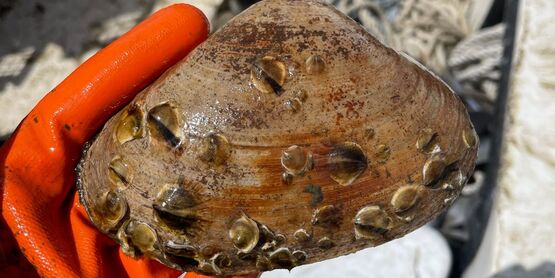
Clam with oyster spat-on-shell
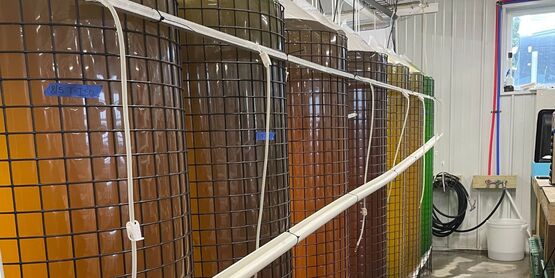
Seacap algae system
SCMELC Production Hatchery
About Us
Located at the Suffolk County Marine Environmental Learning Center, Southold’s large-scale production hatchery serves as a cornerstone of Long Island’s marine restoration efforts. Expanded through state funding from the NYS Shellfish Restoration Project, this state-of-the-art facility produces millions of spat-on-shell (SOS) oysters to support restoration projects throughout the region.
Our work focuses primarily on cultivating oyster larvae and setting them onto recycled shells to create durable, three-dimensional reef material. These reefs provide essential habitat for marine life, support biodiversity, and contribute to improved water quality through natural filtration. By producing oysters for restoration, our hatchery plays a vital role in rebuilding healthy marine ecosystems and sustaining Long Island’s coastal environment for future generations.
Understanding Spat-on-Shell (SOS)
When large numbers of oysters grow together in close proximity, they form a three-dimensional structure known as a reef. In nature, young oysters attach themselves to existing shells and to one another, gradually building reef structures under favorable conditions. This natural process can also be replicated in a hatchery to produce spat-on-shell oysters for restoration.
Unlike a single oyster, which grows individually, spat-on-shell consists of many juvenile oysters attached to a shared shell substrate. At our Production Hatchery, we use large tanks to set juvenile oysters onto recycled shells, creating clusters of oysters that can be deployed to establish and enhance oyster reefs.
The recycled shell used in our process comes from a combination of oyster shells donated by restaurant partners and surf clam shells provided by a commercial bait operation. While oyster shell is our preferred substrate because it is particularly well suited for juvenile oysters to attach to and grow on, other types of shell can also be used to produce spat-on-shell.
Through this process, we transform recycled shell into a valuable resource for marine restoration, helping rebuild oyster populations and strengthen the ecosystems that depend on them.
Plan a Visit
Interested in learning more about our work and seeing the hatchery in action? To inquire about a facility tour, please contact our Hatchery Manager, Danielle Morris, at dm733@cornell.edu.
DonateIf you would like to make a donation to support the SCMELC production hatchery, click HERE or scan the QR code to make your donation through our secure website. |

|
Your fully tax deductible gift is much appreciated and very important to the ongoing success of our education, restoration, community outreach, and research initiatives.
Cornell Cooperative Extension of Suffolk County is a 501(c)(3) not-for-profit organization. All contributions are tax-deductible to the extent allowed by law.
Contact
Danielle Morris
Hatchery Manager
dm733@cornell.edu
Last updated October 29, 2026