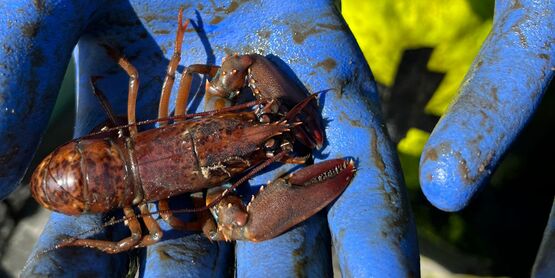
An especially lucky juvenile lobster rescued from a derelict lobster pot retrieved from the western Long Island Sound
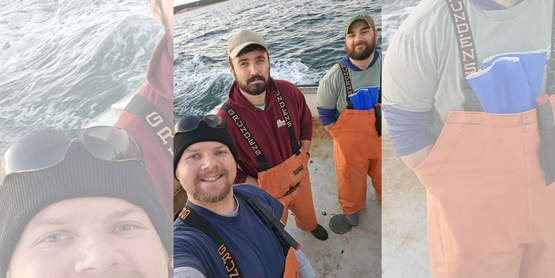
Fisheries Technician Tyler Guteres, Fisheries Specialist Alex Mercado, and Fisheries Coordinator Mike Bowen steaming out aboard the FV Suzanne M
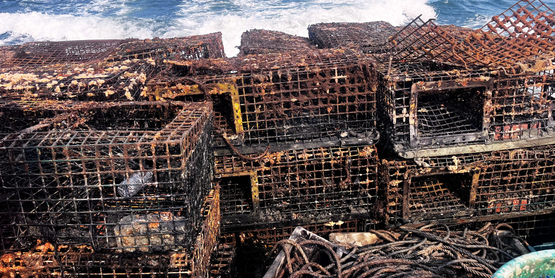
The aftermath of a successful day aboard the FV Suzanne Marie - a stack of very old derelict lobster pots and rope
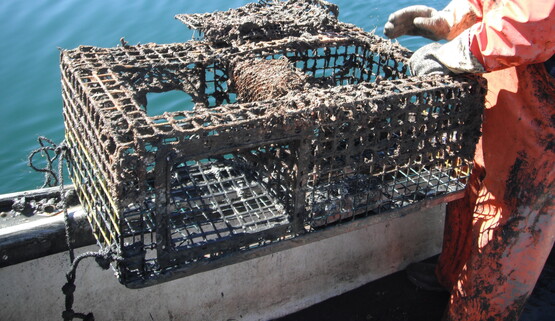
Fisheries Coordinator Mike Bowen assessing the condition of a derelict lobster trap retrieved from the central Long Island Sound
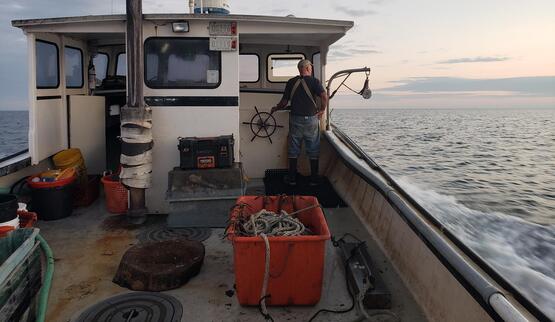
Capt. John German at the helm of the FV Suzanne Marie on a beautiful morning
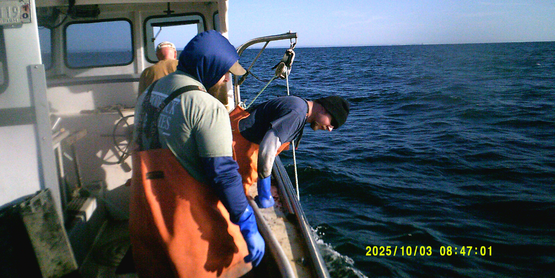
Fisheries Technician Tyler Guteres and Fisheries Coordinator Mike Bowen hauling derelict lobster pots from Long Island Sound

Derelict lobster trap retrieval

Derelict lobster traps piled up for recycling

Fisheries Coordinator Mike Bowen piling up derelict lobster traps

Derelict lobster trap ghost-fishing
Derelict Lobster Trap Removal Projects
Since 2010, Cornell Cooperative Extension’s (CCE) Marine Program has conducted several research projects to remove derelict/abandoned lobster traps in the Long Island Sound (LIS) at the ports of Mattituck, Mount Sinai, Northport, and Oyster Bay. The successes of the projects were manifested through the cooperation of the lobster industry through the completion of surveys, planning sessions of operation field plans, and executing the fieldwork. These programs proved that a substantial quantity of derelict lobster traps have accumulated in the LIS and need to be removed.
Along with contributing to the ongoing problems associated with marine debris, many of these traps are still catching lobsters and are thus adding to the “fishing effort” for lobsters in LIS. CCE data shows that approximately 22% of the derelict lobster traps recovered had one or more lobsters in them and of this 22%, approximately 5% of the lobsters were dead. This is known as “ghost fishing”.
UPDATED METRICS AS OF 10/22/2026
- 21,870: Number of pots removed from Long Island Sound
- 466: Metric tons of derelict pots removed
- 4,376: Number of live lobsters rescued from pots
- 112,000: Number of acres of bottom cleaned up
- 350: Number of trips conducted with the added benefit of supporting local lobstermen
In 2024, CCE was awarded funding through the NFWF Long Island Sound Futures Fund to continue the derelict lobster trap removal effort. CCE will conduct 20 research trips from these ports with a goal of removing approximately 600 more traps from the LIS. CCE continues educational outreach with the commercial lobster industry and local officials to promote environmental stewardship and awareness, as well as improve management practices by providing the template for recycling, proper storage practices and disposal activities for inactive fishing gear.
CCE Marine Program completed the projects listed below:
- NFWF (Fishing for Energy Fund) 2010-2011- Derelict Lobster Gear Assessment, Removal, and Prevention (Pilot Project)
- NFWF (Fishing for Energy Fund) 2011-2012 - Derelict Lobster Gear Assessment, Removal, and Prevention II
- NFWF (Long Island Sound Futures Fund) 2012-2013 - Removing Ghost Fishing Gear to Restore the Sound for Long Island Fisheries (NY)
- NOAA NMFS FY 2012 Community-based Marine Debris Removal Project – Long Island Sound Derelict Lobster Gear Assessment, Removal and Prevention 2012- 2013
- NOAA NMFS FY2012 Community-based Marine Debris Removal Project Grant - Long Island Sound Derelict Lobster Gear Assessment, Removal and Prevention 2014-2016
- NOAA FY20-- Marine Debris Removal - Central Long Island Sound Derelict Lobster Gear Assessment, Removal and Prevention 2017-2020
- NFWF Fishing for Energy FY2019 - Assessing and Removing Derelict Lobster Gear in Long Island Sound (CT, NY)
- Reducing Marine Debris by Removing Derelict Lobster Gear from Long Island Sound-II (CT, NY)
- Virginia Institute of Marine Science - Derelict Gear Removal
- NFWF LISFF - Retrieval of Lost and Abandoned Lobster Traps in LI Sound Using Local Fishers' Knowledge and Sonar
Contact
Scott Curatolo-Wagemann
Senior Educator
sw224@cornell.edu
631-727-7850 x 11318
Last updated October 23, 2026