Taxodium distichum
(Bald Cypress)
2018
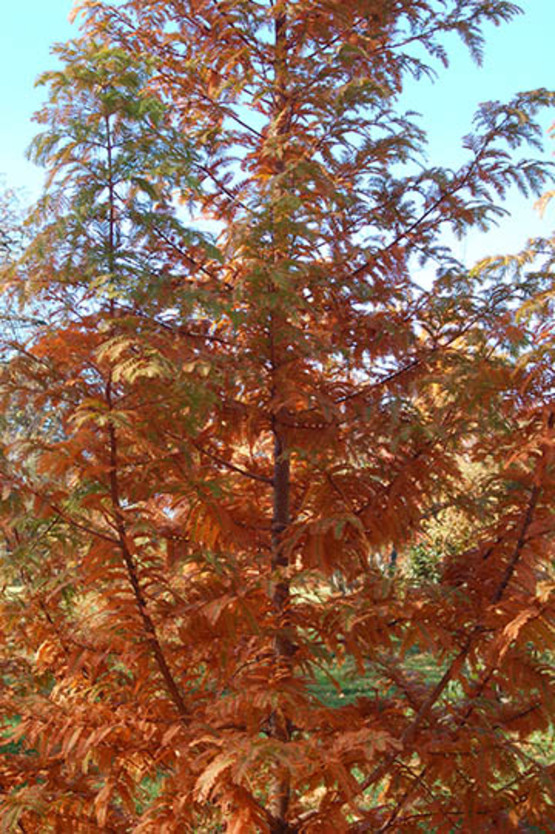 With soft, feathery yellow-green
foliage that turns orange/cinnamon-brown in the fall, this pyramidal conifer is
perfect for a unique landscape accent. Even though bald cypress gives the
appearance of an evergreen tree, leaf drop in the fall is perfectly normal and
its fall color display is outstanding. It grows up to 50-70 feet tall and its
small cones change from purple-green to brown as they mature. Although bald
cypress is native to southern U.S. swamps and bayous, when cultivated it can
grow well in drier, upland soils. These trees, aside from very minor twig
blight, experience few problems. ‘Cascade Falls’ is a compact, weeping form
that can grow up to 20 feet tall. ‘Peve Minaret’ is a compact form growing 10
feet tall and 6 feet wide. Hardy in zones 4-10.
|
Thuja plicata
(Western Red Cedar)
2003
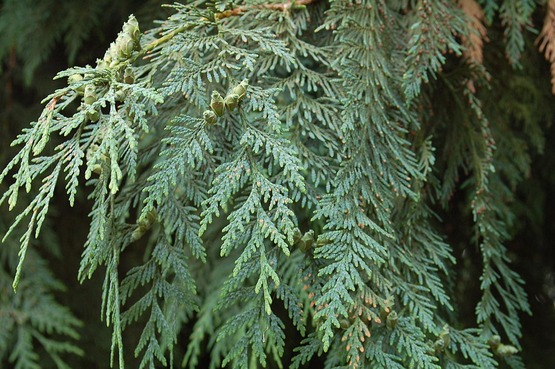 Native to the Pacific Northwest, the
Western Red Cedar is a graceful, pyramidal dark green conifer which provides
good year-round color. It grows at a moderate pace to reach 50 to 70 feet. Its
stature makes it an adaptable specimen plant, for use in a large hedge, and for
mass planting and screening. It can also be used to replace hemlocks that have
been decimated by woolly adelgid. Although it is tolerant of dense shade and
alkaline soils, plant it in sun or partial shade in moist, acidic soil for best
results. Hardy in zones 5-7.
|
Picea orientalis
(Oriental Spruce)
2005
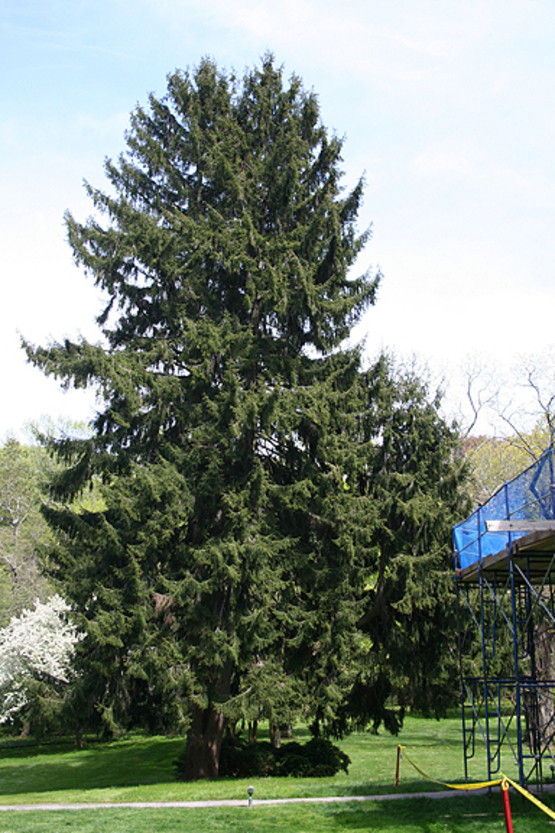 This is a dense, graceful, narrow,
pyramidal spruce with pendulous branches, and short, ¼ to ½ inch needles that
are very dark green and shiny. Oriental spruce is an elegant evergreen tree for
Long Island landscapes that grows 50 to 60 feet tall and from 2 to 25 feet wide
after about 60 years, to 120 feet with enough space. It is adaptable to poor
soils but make sure you water well until establishment. It has few disease or
insect problems. This is an attractive specimen tree for any location and is
superior to both Norway and white spruce. Hardy in zones 4-8.
|
Sciadopitys verticillata
(Japanese Umbrella Pine)
2007
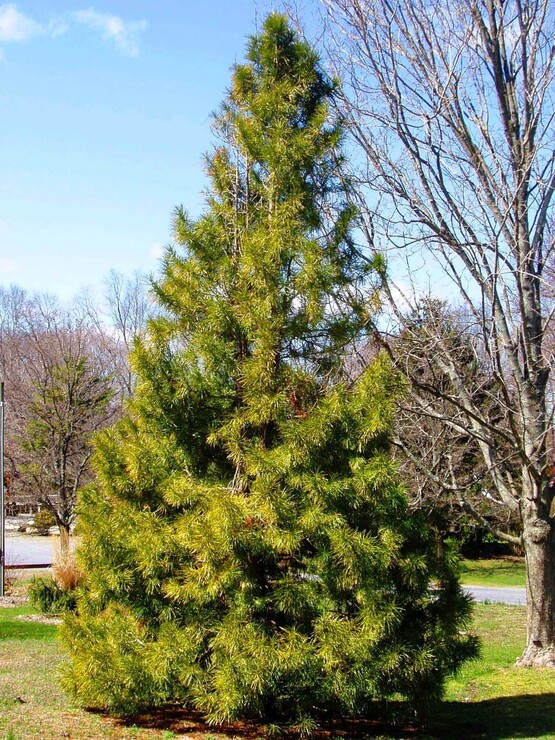 The Japanese umbrella pine is a
remarkably beautiful, dark green, pyramidal tree that has dense whorls of
glossy, flat needles. This specimen tree is slow-growing in early years,
reaching heights of approximately 6 inches per year, but becomes a valuable
mature plant in any landscape, generally growing to 30 feet tall by 20 feet
wide and occasionally to 60 feet or taller. Plant it in spring or fall in full
sun to light shade in fertile moist soil. It is usually pest-free and
deer-resistant. It is only necessary to prune competing leaders; do not remove
lower branches. Hardy in zones 5-8.
|
Thujopsis dolabrata ‘Nana’
(Dwarf Hiba Arborvitae)
2013
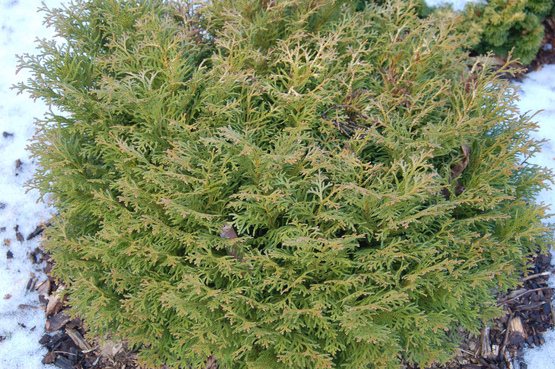 ‘Nana’ is a compact evergreen
coniferous tree with leaves that are green on one side and white on the other.
This compact, arborvitae lookalike is as durable and reliable in the landscape
as its relative, but is a more controlled plant of finer texture and richness.
It is also pest-resistant and does not need any significant pruning to keep it
looking good. A slow grower, dwarf hiba arborvitae can eventually reach 3 to 4
feet wide with equal height. It does best in well-drained soil and full sun or
partial shade. If grown in full sun, the leaves develop an orange-olive hue.
Hardy in zones 6-8.
|
Pinus flexilis
(Limber Pine)
2016
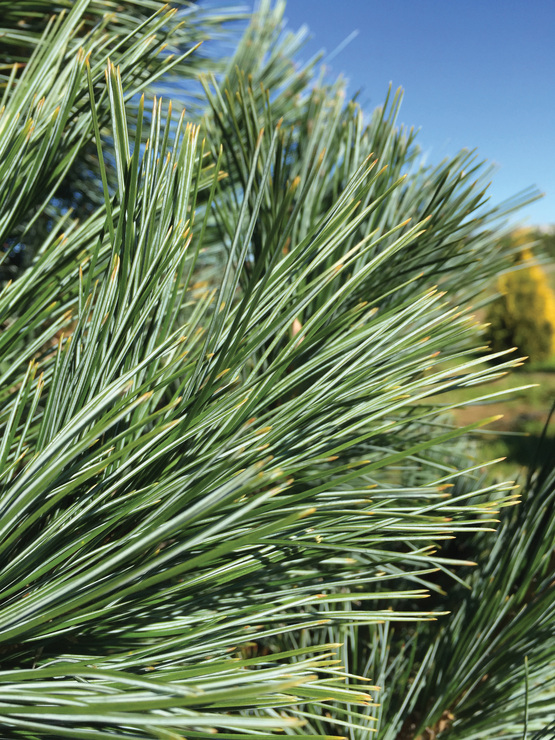 In an urban landscape dominated by
oversized conifers, limber pine fits easily with its modest mature height of 30
to 40 feet. This western U.S. native becomes pyramidal in habit and may be
utilized as a garden accent, specimen focal point, or in groups as an informal
screen. Common commercial cultivars such as ‘Vanderwolf’s Pyramid’ offer steely
blue foliage with four-season ornamental appeal. Limber pine only requires full
sun and well-drained soil to thrive, plus the species’ excellent salt tolerance
is far greater than the commonly grown, much larger eastern white pine (Pinus
strobus). Hardy in zones 4-7.
|
Chamaecyparis thyoides ‘Red Star’
(Red Star White Cedar)
2019
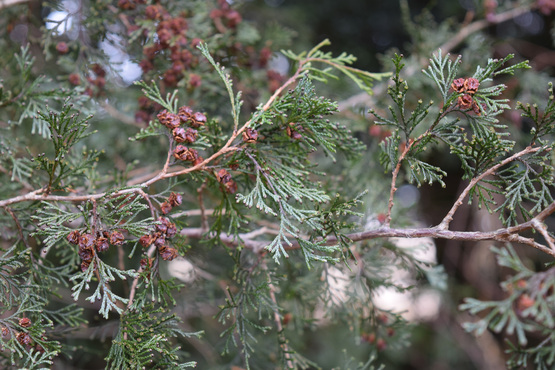 'Red Star' white cedar, a Long Island
native cultivar, thrives in full sun and moist organic soil. The soft
blue-green needles of the juvenile tree mature to become more scale-like. In
natural settings, Atlantic white cedar can reach 50 feet in height and 40 feet
in width. The cultivar ‘Red Star’ grows to a more compact 15 to 25 feet with
its blue-green leaves turning plum-colored in late fall for added winter
interest. Cones add an additional ornamental element with yellow pollen-bearing
cones in spring and purple-brown seed-bearing cones in summer. Whether for a
privacy screening, specimen planting, or back-of-border greenery, ‘Red Star’
will be a stand-out in your garden. Hardy in zones 4-8.
|
Hesperocyparis arizonica ‘Blue Ice', 'Carolina Sapphire’
(Arizona cypress)
2027
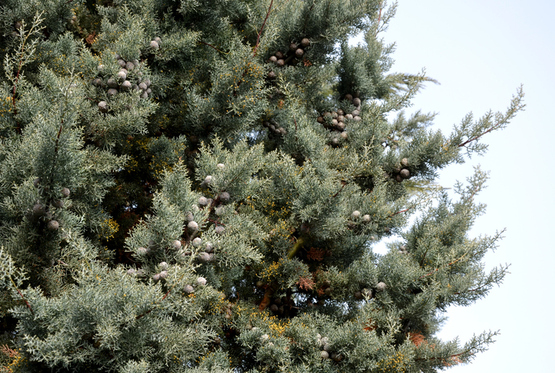 Arizona cypress is a tall and
wide evergreen tree, reaching maturity at 40 to 60 feet tall and 15 to 20 feet
wide. It has attractive silver-blue-green foliage year-round and produces 1- to
3-inch-long cones in the summer. It is relatively easy to grow and maintain, as
well as being deer-resistant, and works nicely for screening. Arizona cypress
grows best in a well-drained, sunny environment, and does not require much
water once established as it is tolerant of extreme heat and drought. Hardy in
zones 7-11, but can be dependent on cultivar.
|