Vines
Hydrangea anomala ssp. petiolaris
(Climbing Hydrangea)
2002
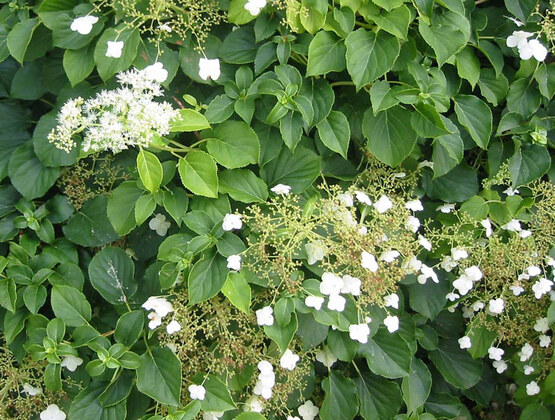 While most hydrangeas are known as
beautiful summer blooming shrubs, climbing hydrangea offers a different
aesthetic and functions as a climbing vine. Its glossy, green leaves emerge in
spring, followed by pure white lace-cap flowers in early summer. Native to the
woodlands of Japan, Korea and parts of Russia, this vine will cling to walls,
fences, and large trees with tiny hair-like roots. Although climbing hydrangea
needs time to establish, this elegant climber will be a great addition to the
garden. Climbing hydrangea is easy to grow and prefers moist, organic,
well-drained soil and full sun or partial shade. It is rather pest-free. Hardy
in zones 4-8.
|
Clematis montana var. rubens
(Pink Anemone Clematis)
2008
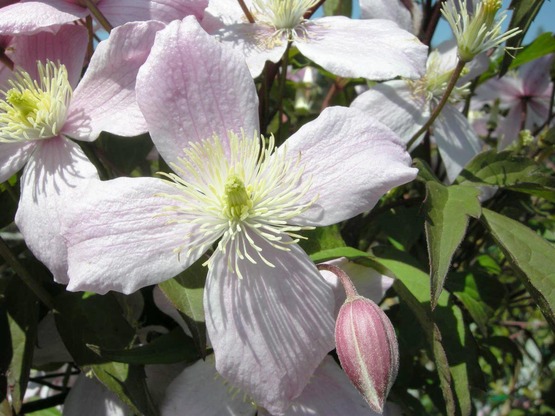 This vigorous, disease-resistant vine
grows from 20 to 30 feet long and develops many rosy-pink, 2 to 2 ½ inch,
fragrant flowers from May into July. Even when flowering is done, seedheads
left behind by the flowers ensure this vine still looks incredibly beautiful in
the winter months. Grow pink anemone clematis in organic soil with its roots in
shade or mulched with its top growth in sun to part shade with good moisture
during growth. Prune after flowering for shape and size. Use it on fences or
other sturdy supports. Hardy in zones 4-9.
|
Lonicera sempervirens
(Trumpet Honeysuckle)
2010
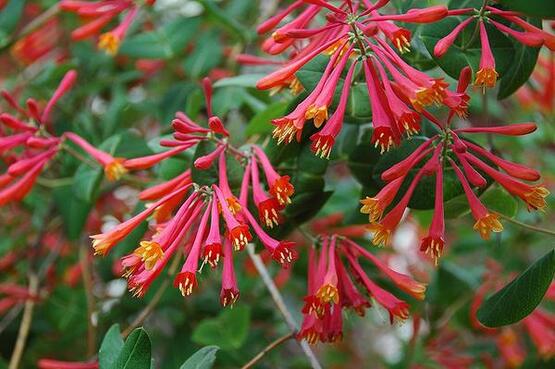 Trumpet honeysuckle is a Long Island
native vine that twines around suitable supports to reach a height of 12 to 15
feet tall with leathery, blue-green leaves that shimmer silver underneath.
Flowering typically commences by Memorial Day and continues in waves through
Halloween. The tubular flowers are held in bunches and colored a brilliant
coral on the outside with contrasting yellow-orange throats. Native ruby
throated hummingbirds flock to these blooms and songbirds follow to consume red
berries late in the season. Trumpet honeysuckle is tolerant of variable light
and soil conditions with best performance in sun and rich, moist soil. Hardy in
zones 4-9.
|
Wisteria frutescens ‘Amethyst Falls'
(American Wisteria)
2017
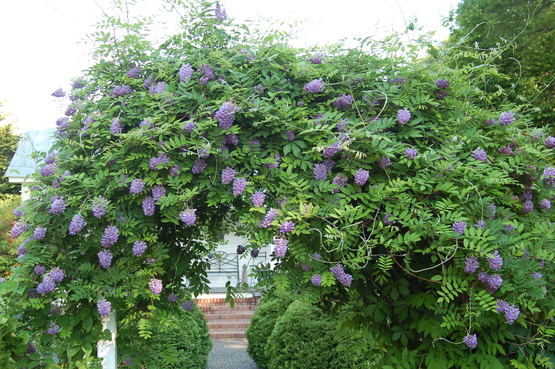 Unlike the invasive Asian species,
this cultivar of our native wisteria vine is more garden-friendly and still
offers beautiful flowers but with a dense growth habit. In May and June,
‘Amethyst Falls’ gives an abundant display of 6 inch purple flowers, and
sporadically blooms into mid-summer. Our native wisteria flowers on new wood so
pruning is not as critical or needed. Pruning after most flowering finishes
will keep plants neat and orderly. ‘Amethyst Falls’ wisteria is adaptable to
most soils, and will grow on a trellis, arbor or fence post in full sun or
partial shade. Hardy in zones 5-9.
|
Bignonia capreolata
(Crossvine)
2022
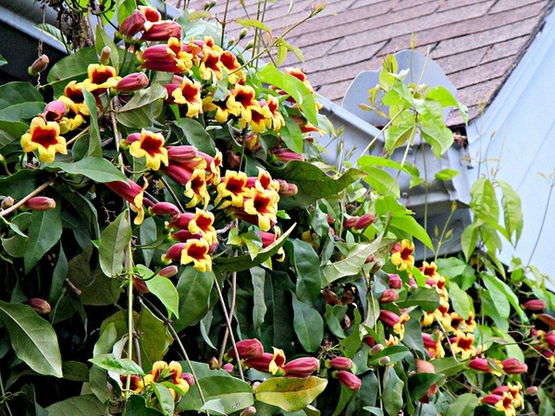 Native to the southeastern United
States, crossvine is a vigorous, woody evergreen vine, boasting glossy green
leaves and orange trumpet flowers attractive to hummingbirds. Grows from 35 to
50 feet tall and 6 to 9 feet wide. Blooms in late spring to early summer and
prefers full to partial sun in well-drained soil. Established plants may send
root suckers which should be removed if spread is not desired. Once
established, it is able to tolerate drought and adapt to various soil types.
Hardy in zones 5-9.
|
Last updated October 20, 2026