Microbiota decussata
(Russian Arborvitae)
2000
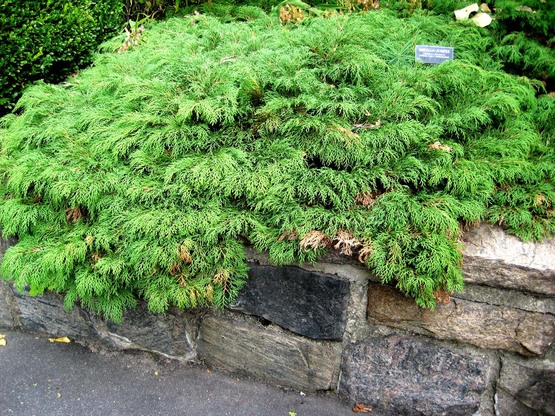 Native to the Sikhote-Alin Mountains
of eastern Russia, the Russian arborvitae is a low-growing evergreen
groundcover that offers a unique alternative for junipers. Its pleasing green
color shifts to a bronzy purple during the fall season. This adaptable plant
will perform nicely in a range of conditions; from moist, well-drained soils to
drier conditions, and in partial shade to full sun locations. The prostrate
growth will attain a height of about 12 to 16 inches and will grow horizontally
from 8 to 12 inches annually, eventually reaching a spread of 12 feet. It also
works nicely in a raised planter, where it can weep over the sides. No known
pests or diseases. Hardy in zones 3-8.
|
Epimedium x perralchicum ‘Frohnleiten’
(Barrenwort)
2001
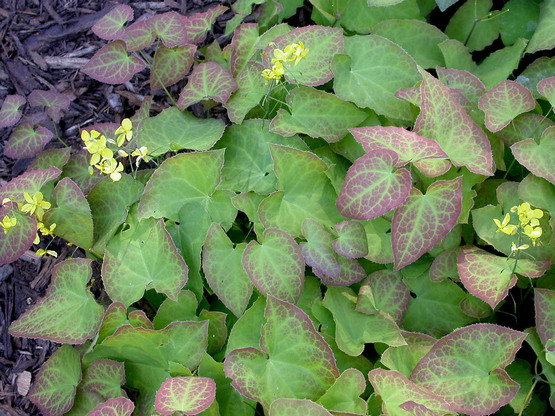 A hybrid originating from Europe, the
sturdy, quick-establishing and low maintenance barrenwort is an ideal
groundcover for the shade. It performs well in moist, organic soils and even in
difficult-to-handle, dry-shade locations. For fast coverage, transplant 6 to 8
inches apart. Plants spaced 12 inches apart will fill in more slowly as the
plants produce runners. Cut barrenwort back in the spring and use a lawn mower
in large areas. Bright yellow flowers appear soon after, then the fresh, green
foliage with a red edge resumes growth and remains evergreen throughout the
year. Deer and pest-resistant. Hardy in zones 5-9.
|
Stephanandra incisa ‘Crispa’
(Cutleaf Stephanandra)
2001
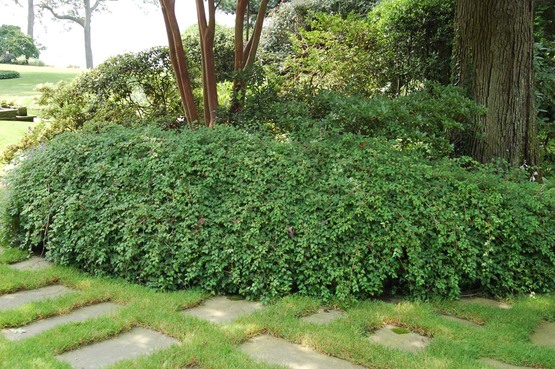 With deeply incised, triangular,
glossy, green leaves that produce a nice, textural shrub, Cutleaf stephanandra
is a small plant native to Korea and Japan that can grow up to 3 feet tall. It
spreads reasonably over time via self-rooting branches and makes a good erosion
control plant on hills and slopes, or can be shaped into a nice, dwarf hedge.
Crispa’s fall color is a nice apricot to maroon purple. The attractive foliage
plus its graceful arching habit makes it a pleasant specimen plant, suitable
for a shrub border. Use this tough, disease-free plant in partial shade to full
sun, and average soil. Hardy in zones 3-7.
|
Ceratostigma plumbaginoides
(Plumbago / Blue Leadwort)
2002
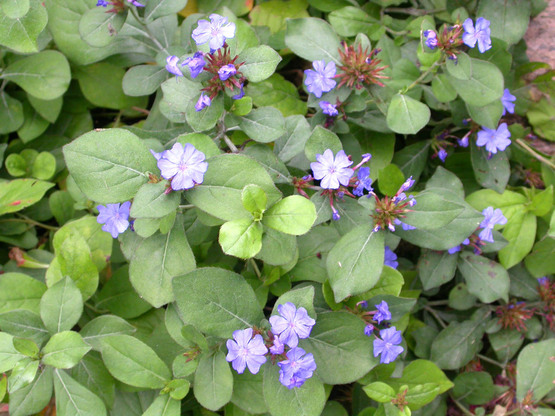 Native to Western China, this
carefree, long-flowering perennial has foliage that turns brilliant reddish
bronze in late September and persists through November. Bright green foliage
emerges late and can prevent weed growth. Deep, gentian-blue flowers appear
from August into September. Durable and deciduous, this groundcover can be used
for edging or at the front of the border. Cut it back hard at the end of the
season. Grow it in full or partial sun locations in well-drained soil high in
organic matter. Because it emerges late, interplant with early-flowering bulbs
for best results. It grows 8 to 12 inches tall with a 12- to 18-inch spread.
Hardy in zones 5-10.
|
Sarcococca hookeriana var. humilis
(Dwarf Sweetbox)
2004
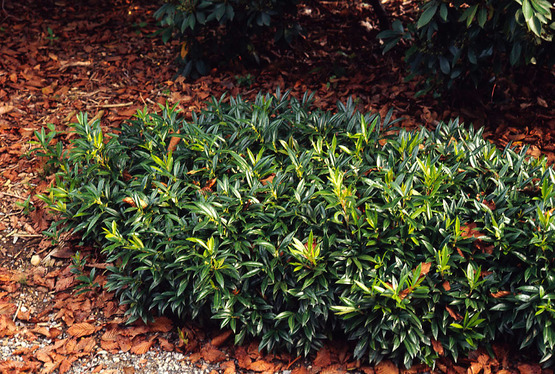 Native to western China and the
eastern Himalayas, Dwarf sweetbox is a shade-loving, woodland groundcover that
has attractive, dark evergreen foliage. In February to March, highly fragrant,
white flowers bloom, but shy away from the surface. This plant grows to about
24 inches both in height and width, and spreads slowly to form nice drifts.
Plant it in moist, acidic soils in shaded or partially shaded areas. Consistent
moisture is ideal. It is best to mulch new plantings. Prune this plant after
flowering to preserve its fantastic shape. Dwarf sweetbox works well with
rhododendrons and other acid-loving plants and is highly pest resistant. Hardy
in zones 6-8.
|
Waldsteinia ternata
(Siberian Barren-Strawberry)
2005
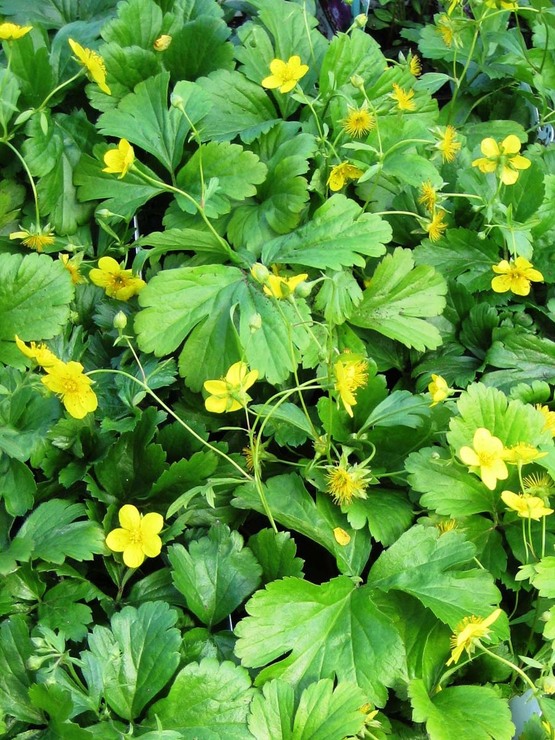 Siberian barren-strawberry is a tough,
vigorous, mat forming, semi-evergreen groundcover. This low growing plant
reaches only 4 to 5 inches tall and has shiny foliage that resembles a
strawberry plant. Saucer-shaped, bright yellow flowers appear in late spring
through early summer. This plant thrives in humus-rich, acidic soil in partial
or full shade. It effectively competes with weeds once established. It works
well as a lawn alternative or groundcover in a natural garden and is deer
resistant. Hardy in zones 4-7.
|
Carex morrowii ‘Ice Dance’
(Ice Dance Sedge)
2009
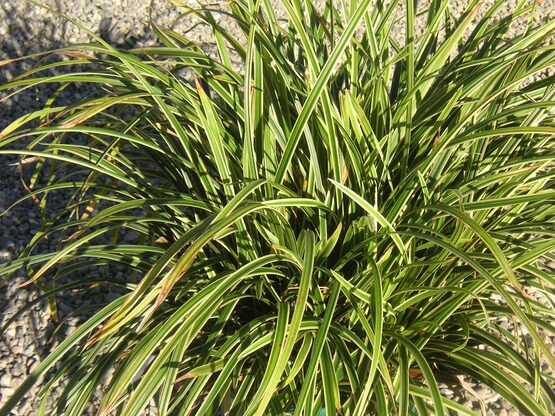 ‘Ice Dance’ sedge is a fine, textured,
grass-like groundcover that thrives in moist situations. Also, its white-edged
leaves will shine brighter and be healthier when shade is introduced. Its
height can vary from 16 to 18 inches. While many sedges are clump-forming, ‘Ice
Dance’, when planted on one-foot centers, will spread to cover the ground in no
time. The evergreen foliage is quite stiff to the touch, making it resistant to
deer browsing. Following extreme winters, tattered plants can be revitalized by
cutting or mowing the leaves to the ground. Hosta and ferns make suitable
companions. Hardy in zones 5-9.
|
Phlox stolonifera
(Creeping Phlox)
2009
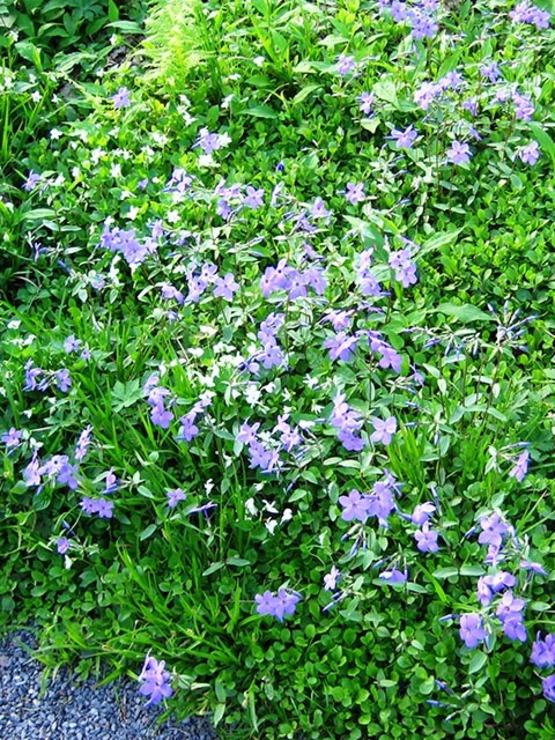 Creeping phlox is a low-growing,
perennial groundcover. It is native to the Appalachian Mountains where it grows
demurely along moist stream banks, and is perfectly at home in the shade garden
or as part of an informal woodland planting. In the spring, lavender-purple
flowers delicately stand above the mat of small, oval, green leaves. Spreading
at a slow to moderate pace by way of stolons, creeping phlox will eventually
reach 12 inches wide, and will be 3 inches tall. With flowers it can reach from
6 to 12 inches tall. Grow it in partial shade in moist, well-drained, acidic
soil. Stems may be cut back after flowering. Hardy in zones 2-8.
|
Sedum spurium ‘John Creech’
(John Creech Two Row Stonecrop)
2011
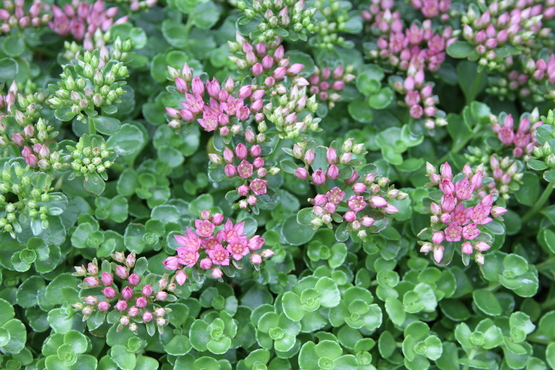 ‘John Creech’ is a very low-growing,
evergreen groundcover. At only 2 inches tall, this sedum will quickly spread to
18 inches wide or more, rooting at nodes along the ground. Small, succulent
leaves are tinged blue-green, and tiny, rosy pink flowers appear in the late
summer and early fall. This creeper is quite versatile and can be used in rock
gardens, for green roofs, between stepping stones, and in low-maintenance
gardens. ‘John Creech’ has been tested and ranks among the best groundcovers
for its ability to suppress weeds on Long Island. Grow it in full sun and in
soil with excellent drainage. Once established, it is heat and drought-tolerant
and requires no fertilizer. Hardy in zones 3-8.
|
Carex pensylvanica and C. appalachica
(Pennsylvanian sedge and Appalachian
sedge)
2027
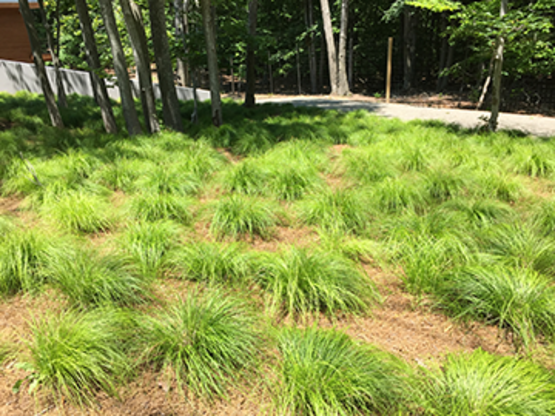 Pennsylvania and Appalachian
sedges are both grass-like, herbaceous groundcovers native to New York. Both species thrive in dry shade. Pennsylvania
sedge is native to LI, and forms a dense, mat-like lawn and is often
recommended as an alternative to traditional lawns. It has a mature height of 6
to 10 inches with a 12- to 18- inch spread and has small, showy, yellow tuft-like
flowers in April and May. Appalachian sedge (native to upstate New York only)
has a similar habit and form (8 to 10 inches tall with a 10- to 14- inch spread)
except the flowers are not as showy. Both plants serve as low-maintenance lawn
alternatives in shade to part shade conditions. When using these as an
alternative to regular turf in shade, mow the over-wintered foliage to 2 – 3
inches before the new shoots appear in spring. Pennsylvania Sedge is hardy in
zones 3-8, while Appalachian sedge is hardy in zones 4-8.
|