Stewartia pseudocamellia
(Japanese Stewartia)
2000
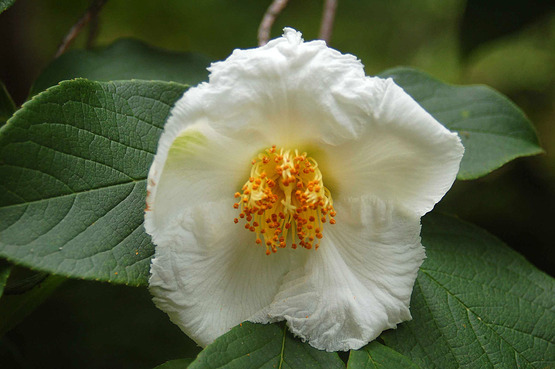 Native to both Japan and Korea, the
Japanese stewartia is a graceful, deciduous tree. Its natural pyramidal shape
grows into a small tree of 20 to 40 feet in height or can be trained as a large
shrub. In July, 3 inch white blooms with decorative yellow stamens appear. To
achieve the best appearance, plant in full sun in organically rich, moist
acidic soils. In fall, its green leaves shift from orange to scarlet, then give
way to reveal gorgeous, exfoliating bark in shades of dark brown and red. The
Japanese stewartia is a solid, low maintenance performer that is pest-resistant
and needs little pruning. Hardy in zones 5-7.
|
Malus ‘Sugar Tyme®’
(Crabapple)
2002
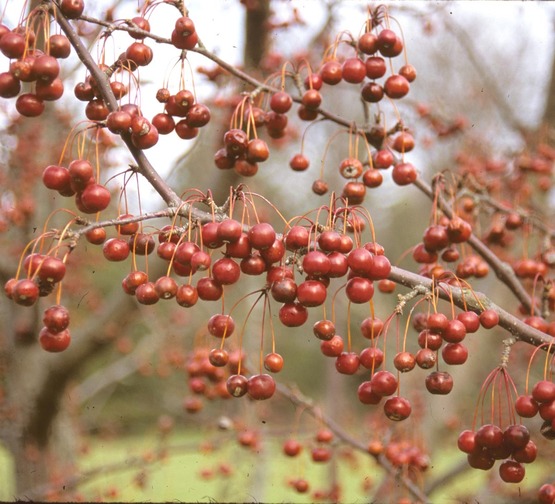 Native to the temperate regions of the
world, ‘Sugar Tyme®’ is a highly disease-resistant crabapple. This small tree
reaches 18 feet tall and 15 feet wide at maturity. It features profuse and
slightly fragrant pink flowers, attractive foliage, persistent red fruit, and
smooth bark, which adds appeal throughout winter. This multi-season specimen
tree has consistently good flowering and performs best in full sun. Sugar Tyme®
crabapple is tolerant of a wide range of soil conditions, although it performs
best in rich, well-drained soil. Refrain from pruning in the spring, as this
creates open cuts susceptible to fireblight bacterium. Hardy in zones 5-8.
|
Sorbus alnifolia
(Korean Mountain Ash)
2004
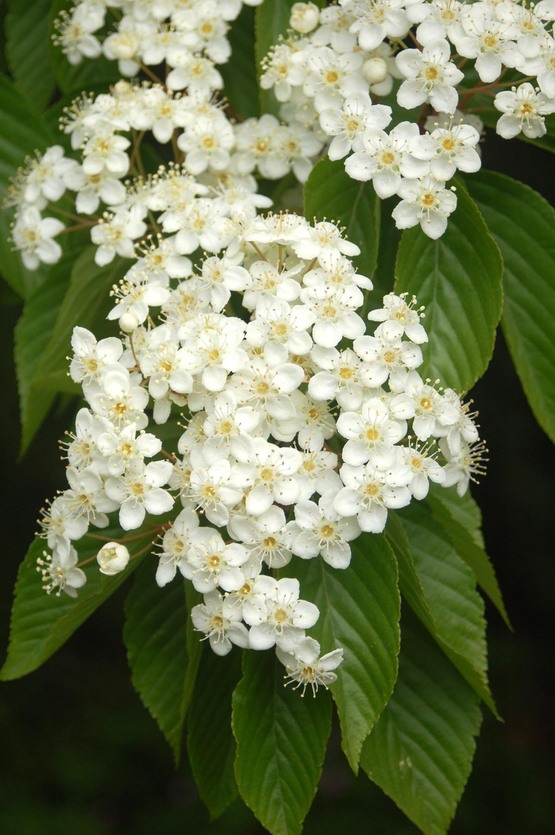 Unlike other mountain ashes, Sorbus
alnifolia is an extremely decorative, deciduous tree with few problems. Native
to the temperate regions of Asia with a moderate growth rate, it will reach a
height of 40 to 50 feet and a width of 50 feet. In May, it produces clusters of
white flowers followed by persistent red to pink fruit held on vibrant red
pedicels. From September through November, its foliage transitions beautifully
through yellow, orange, and red tones. The tree also features smooth,
silvery-gray bark that provides winter interest. Mountain ash performs well in
moist, neutral to alkaline soil and partial to full sun location. Hardy in
zones 4-7.
|
Prunus ‘Hally Jolivette’
(Cherry)
2005
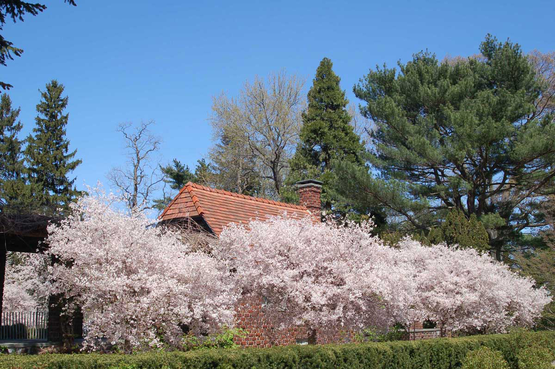 Native to the temperate regions of the
world, ‘Hally Jolivette’ is a beautiful, small, flowering cherry tree. This
cherry grows fast to a height and spread of 15 feet, and flowers profusely even
when young. The pink buds of semi-double flowers start to open in late April
through early May. Flowers are light pink or white with a deep red or purple
center, and appear before the leaves, providing continually opening blossoms
over a 10-to-20-day period. ‘Hally Jolivette’ is densely branched yet finely
textured. It may also be grown as a multi-stemmed shrub, although this form is
rarely available. It is very cold-hardy and stress-tolerant for a cherry. Hardy
in zones 5-8.
|
Syringa reticulata ‘Ivory Silk’
(Japanese Tree Lilac)
2008
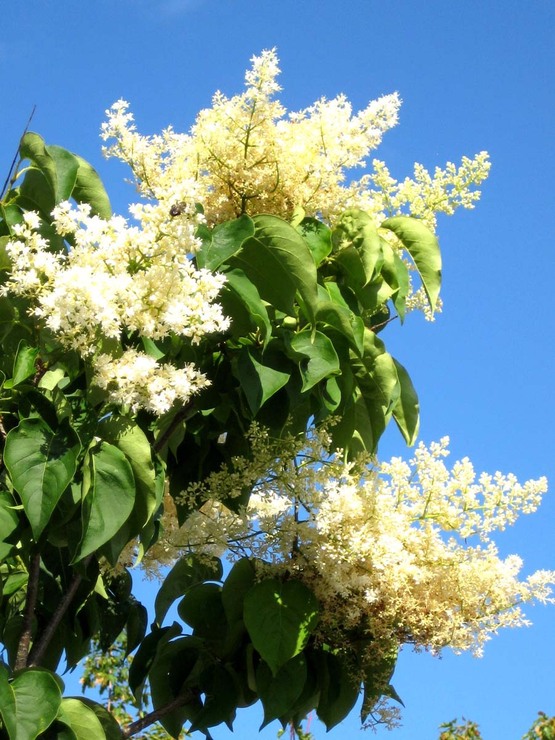 Native to Japan, ‘Ivory Silk’ is a
delightful, rounded, small tree or shrub that grows to 20 to 25 feet tall and
has dark green foliage and large clusters of creamy white flowers in June. This
tree grows best in organic, moist soil in full sun with good air movement. It
can also grow in urban environments. Prune it to shape after flowering. This
terrific tree is best used as a street tree, small specimen, or in a group. It
is also good near buildings or property line screening. This lilac is notably
resistant to major pests of other lilacs, such as borers and powdery mildew.
Hardy in zones 3-7.
|
Magnolia ‘Galaxy’
2010
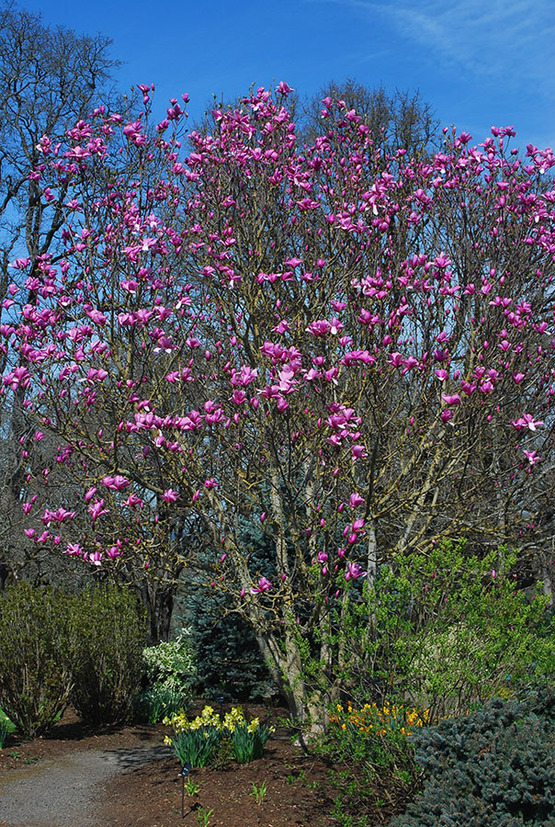 Blooming in late April before
leaf-emergence, this hybrid tree developed by the US National Arboretum is
graced with a profusion of dark, reddish-purple to pink goblet-shaped blooms.
As it flowers a bit later than most deciduous magnolias, ‘Galaxy’ escapes the
potential frost damage of early spring that is often felt by others. Upright
growth and branching habits occur early in the tree’s life, attaining a height
of 30 feet and a width of 15 feet. The tree may sucker at a young age -- if
these are periodically removed, it will develop into a beautiful specimen for
the average home landscape. It is pest and disease-resistant. Hardy in zones
5-9.
|
Styrax japonicus ‘Emerald Pagoda’
(Japanese Snowbell)
2010
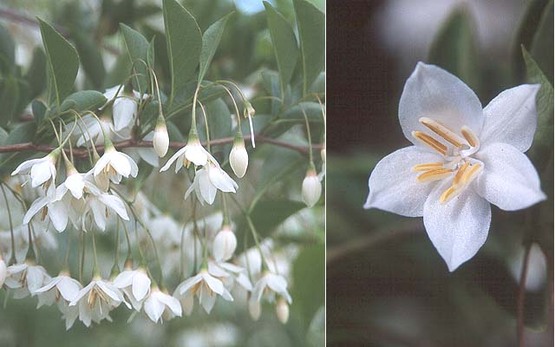 Native to Japan and Korea, Japanese
snowbell is slow-growing tree with an upright somewhat columnar shape. This
specimen tree reaches 20 to 30 feet tall and 20 feet wide at maturity. ‘Emerald
Pagoda’ is known for its dark green, leathery leaves and slightly fragrant
bell-shaped, downward-facing white flowers in May. It has a good yellow fall
color. It can be grown as a specimen or woodland understory tree. Japanese
snowbell grows well in sun to part shade in organic, moist, well-drained soils.
May need water in a dry summer. Hardy in zones 6-9.
|
Cornus mas ‘Golden Glory’
(Cornelian-cherry Dogwood)
2011
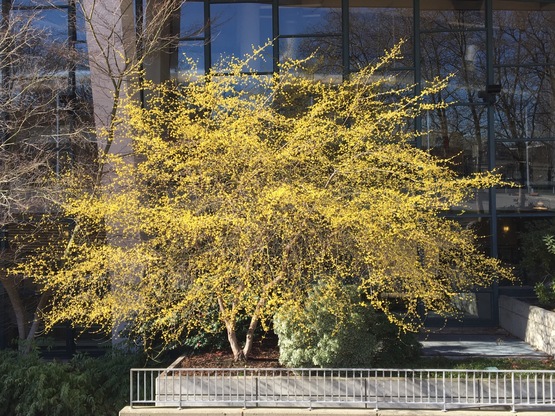 Decidedly shrubby in its youth,
‘Golden Glory’ develops a more arboreal presence aged 20 to 25 feet tall. In
early spring, its upright stems are coated with bright yellow blooms that
create a sunny haze. Red fruit dangles like cherries in early fall. In the
interim this Eurasian native tree features clean, dark green foliage that may
color well in autumn. Gently peeling bark in shades of brown and rust completes
its multi-season appeal. ‘Golden Glory’ is perfect wherever a small tree is
needed. All that is required is full sun to light shade and well-drained soil.
After establishment, the plant is notable for its drought-tolerance and overall
toughness. Hardy in zones 4-8.
|
Chionanthus retusus
(Chinese Fringetree)
2012
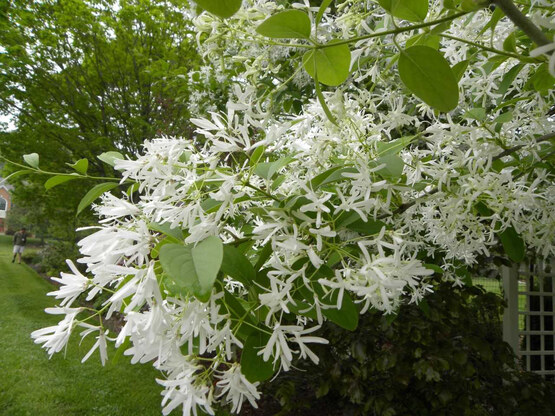 A more stately alternative to our
American native, this Chinese relative is one of our most beautiful small
trees. Though it can be found as a large multi-stemmed shrub, it’s most often
grown as a single-trunked tree, maturing to a height and width of 20 to 25
feet. In late spring to early summer, the tree erupts in upright clusters of
showy, slightly fragrant, pure white flowers that resemble soft fringe. Other
distinct features of this tree are its shiny, rounded, deep green leaves and
the peeling or tightly ridged bark. Adaptable to varied growing conditions of
site and soil, this fringe tree is dependable in Long Island gardens. Hardy in
zones 5-9.
|
Cercis canadensis
(Eastern Redbud)
2013
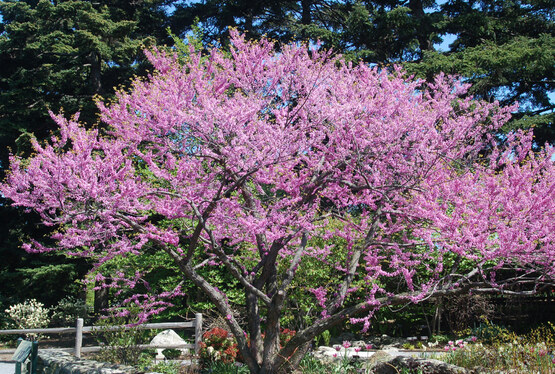 A beloved native flowering tree,
Eastern Redbud lights up the spring landscape with a profusion of small,
rosy-pink flowers that emerge directly on bare stems and branches in April. As
the blooms fade, bold, heart-shaped green leaves take over, providing texture
and shade through summer. Mature specimens can reach 25 to 30 feet tall with a
similar width. Redbuds prefer well-drained soils and partial shade but can
thrive in full sun with regular moisture. Can be sensitive to root rot in
poorly drained soils. Hardy in zones 4-8. Outstanding cultivars that are
disease-resistant include: ‘Appalachian Red’ – vivid reddish-pink flowers,
‘Covey’ – graceful, weeping habit, ‘Forest Pansy’ – deep burgundy foliage in
spring and early summer.
|
Cornus florida
(Flowering Dogwood)
2014
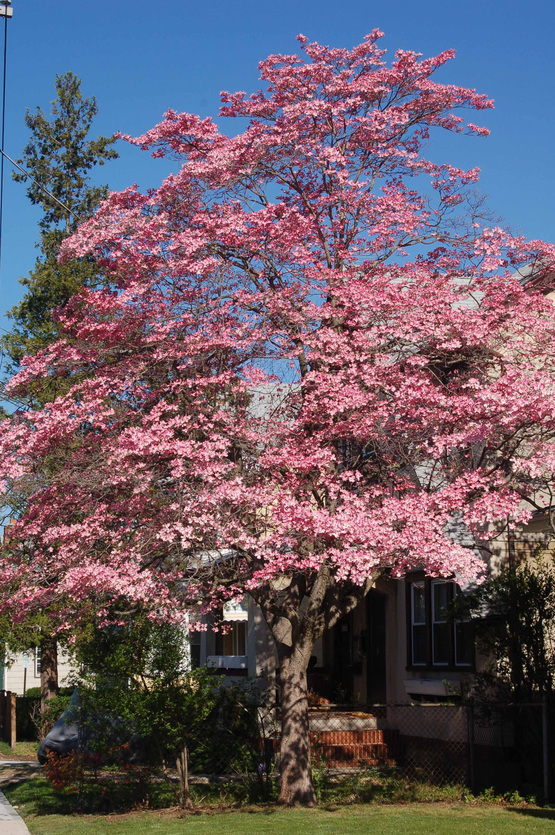 This classic, native tree displays
pure white or pink showy bracts in spring, rich shades of red and maroon
foliage in fall as well as glossy red berries and a rough, alligator skin like
bark all year round. Flowering dogwood should be sited in full sun or partial
shade on an eastern exposure where there is good air circulation to avoid
diseases. Avoid aboveground watering in the afternoon or evening hours as well.
Rich, organic, well-drained soil is preferred along with 1 to 2 inches of mulch
around new plants. Cherokee Princess,’ ‘Cherokee Brave,’ and ‘Appalachian
Spring’ are excellent cultivars with good vigor and pest-resistance. Hardy in
zones 5-9.
|
Lagerstroemia indica x faurieri ‘Natchez'
(Crape Myrtle)
2015
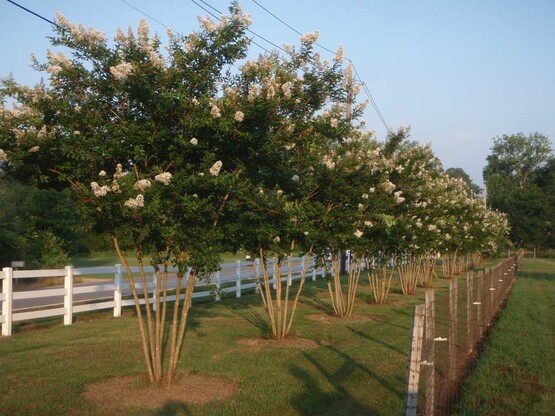 This upright, multi-stemmed, deciduous
shrub or small tree offers beauty in each season. Spring leaves emerge as
bronzy red and mature to a glossy dark green. In August, panicles of bright,
white flowers adorn every stem tip. Brilliant shades of yellow, orange and red
and the ornate multi-colored bark decorates the fall and winter landscape.
‘Natchez’ crape myrtle does best sited in full sun in moist, acidic soils.
However, soil too fertile will cause foliage to grow at the expense of flowers.
Allow it room to grow, as mature size is 20 feet in width and height. ‘Natchez’
has excellent mildew resistance. Hardy in zones 6-9.
|
Heptacodium miconioides
(Seven-son Flower)
2019
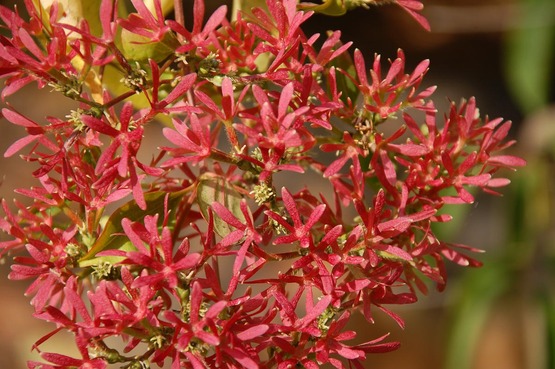 Native to China, this deciduous shrub
or small tree is similar in form to crape myrtle with its showy flowers and
exfoliating bark. Growing up to 15 to 20 feet tall, this plant is one of the
first to break dormancy in spring, and one of the last to bloom. In August,
clusters of fragrant white flowers bloom at the ends of branches, which then
transform to striking small fruit. The showy red to burgundy calyxes
surrounding the fruit give a beautiful display, and the birds enjoy the treat
in late fall as well. Can be grown as a single-stem tree or multi-stem shrub.
Plant in full sun to part shade; can tolerate salt spray. Hardy in zones 5-9.
|
Cotinus obovatus
(American smoketree)
2023
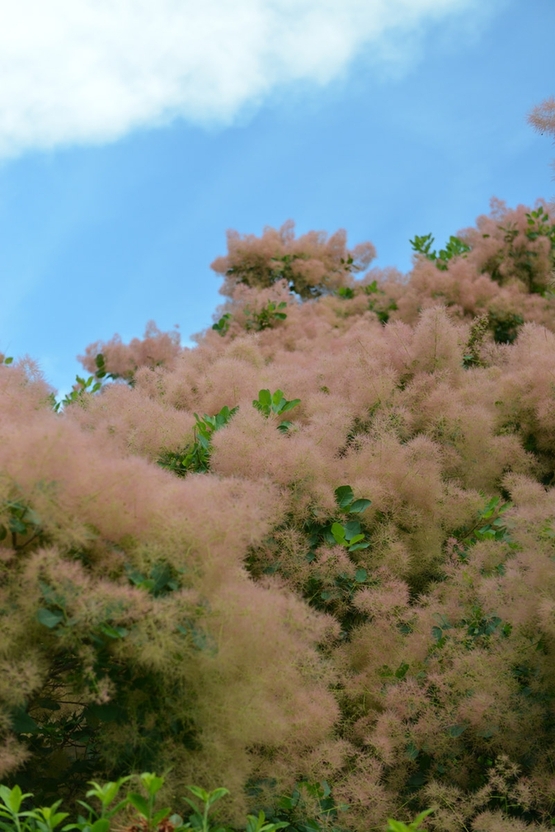 American smoketree is a small
deciduous tree native to the southern U.S. In early summer, inconspicuous airy
flower clusters mature to showy pink to pink-purple clouds as a result of hairs
surrounding the small fruit. The effect is a showstopper. The show continues
into fall with leaves turning red, orange, or yellow. Best sited in full sun in
lean soil with good drainage, but other soil types are tolerated. Reaching a
mature height of 20 to 30 feet, American smoketree works well as a specimen
tree or grouped for a dramatic effect. Hardy in zones 4-8.
|
Chionanthus virginicus
(White Fringe Tree)
2024
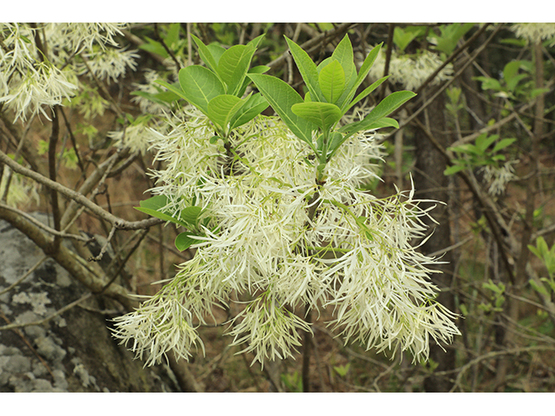 This Southeast native is planted as a
fast-growing, multi-stemmed large shrub (10-15 foot height and width at
maturity) and is especially noted ornamentally in late Spring for its profusion
of light, airy clusters of white flowers. Furthermore, it can also exhibit a
reasonably dependable yellow fall leaf color. Though this species has male and
female flowers produced on separate plants, if you plant one of each in a
grouping, there will be the added benefit in early Fall (on the female plants),
showy clusters of blue/black berry-like fruits. These will contrast well with
the omnipresent fall leaf color. Soil and location requirements are not an
essential factor, as this species is very site adaptable, and is also very
problem-free. Best to plant in a group, in sun or light shade, and provide
sufficient room for the plants to grow and mature properly. Hardy in zones 3-9
|
Diospyros kaki
(Japanese persimmon)
2025
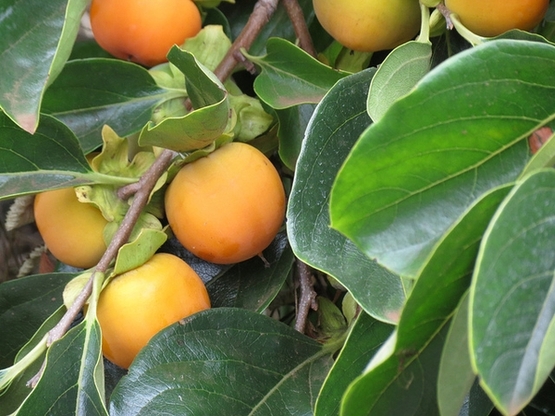 The edible persimmon of commerce,
Japanese persimmon (often known as "Kaki") is a superb edible
ornamental that thrives on Long Island and throughout zone 6B-10. It assumes
the stature of a small, rounded tree 20 to 30 feet tall with ornamental virtues
throughout the year. Clean, glossy leaves emerge in late spring before the
curious, cream-colored flowers. These are followed by beautiful, large orange
fruit that dangle like miniature pumpkins in late fall long after the foliage
has flamed orange-red and fallen. The fruit is often most palatable after being
touched by light frost. Japanese persimmon is easily grown and trouble-free in
full sun and any well-drained soil of moderate fertility. Hardy in zones 7-10.
|
Crataegus viridis ‘Winter King’
(Green Hawthorn)
2026
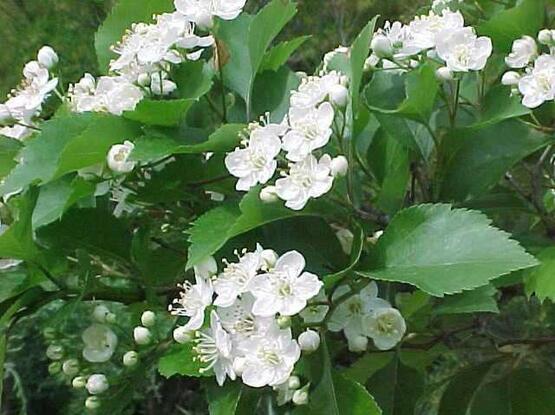 Winter King hawthorn is a standout
tree selection of the Southeast native hawthorn with many celebrated traits.
This selection has proven disease-resistance, a better overall shape and
branching structure, bright red persistent fruit, silvery-bark stems, and
reduced thorns. In May, white 2.5-inch flower clusters provide a showy display
that lasts 3 to 4 weeks, making it an excellent alternative to the invasive
Callery pear. In fall, the glossy green leaves change to shades of purple
to scarlet. At the tree's maturity, Winter King remains small at 20 to 25 feet
in height and width, making it ideal for small spaces. Overall, this is a tough
and easy-to-maintain tree that offers multi-season interest. Not recommended
for street planting due to presence of thorns on younger stems. Full sun and
good drainage ensure the best flowering. Hardy in zones 4-7.
|
Aesculus pavia
(Red Buckeye, Firecracker Plant)
2027
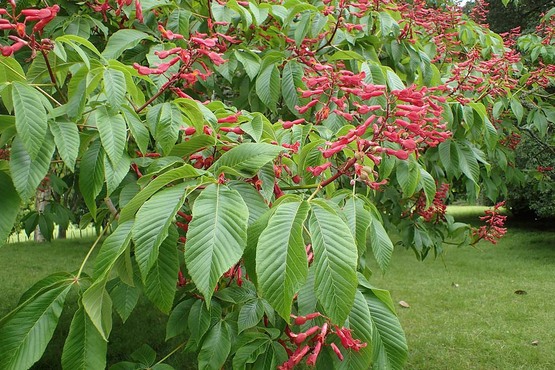 Red Buckeye, sometimes called the
Firecracker Plant, is a flowering, multi-stemmed large shrub or
single-trunked small deciduous tree native to southern and eastern parts of the
US. It reaches 16 to 20 feet in height, with serrated elliptical leaflets 4 to
6 inches long and 4-to-7-inch red, tubular flower clusters in the spring. In
the fall, it produces mature brown fruits, about 1 inch in diameter. Its
attractive appearance adds value to any garden both as an accent plant or for
general garden use. Red Buckeye grows well in any outdoor light level but
prefers soil with average or moist characteristics. Hardy in zones 4-8.
|