Rudbeckia nitida ‘Autumn Sun’ / 'Herbstsonne’
(Coneflower)
2001
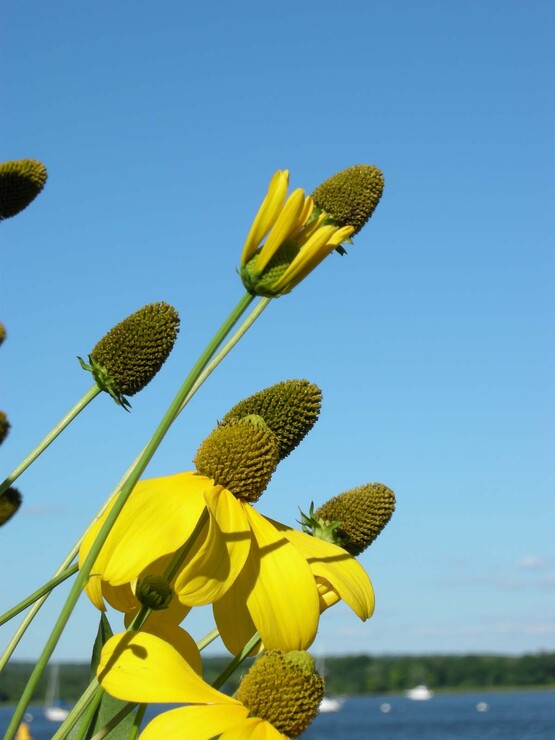 Native to the Southeastern and central
United States, this tall, late-blooming perennial produces a dramatic show in
the late August and September garden: many 3 to 4 inch yellow-rayed, green-eyed
flowers balanced on 5 to 6 feet stems supporting shiny, gray-green leaves. To
prolong bloom, remove spent flowers. Grow it in full sun and well-drained soil
to prevent flopping. Leave plants and seed heads to provide structure and
texture in the winter garden. Ideal for the back of borders, naturalistic
plantings, or meadow-style designs. No serious insect or disease issues pose a
threat to this plant. Hardy in zones 5-10.
|
Heuchera villosa ‘Autumn Bride’
(Autumn Bride Alumroot)
2003
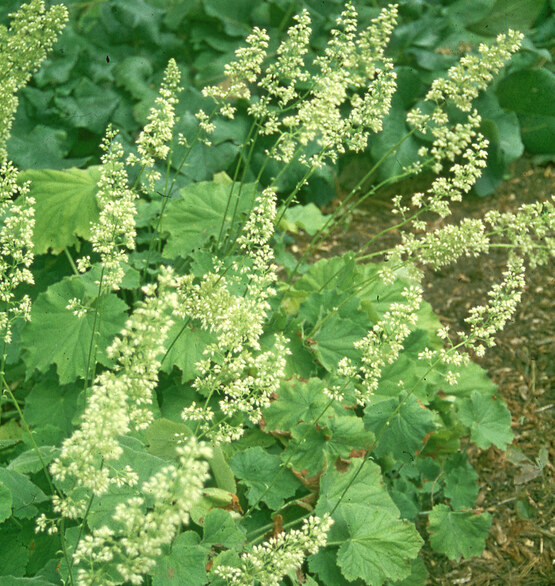 Native to much of eastern and central
North America, ‘Autumn Bride’ is a perennial perfect for difficult, dry shade
locations. It will tolerate sun but will also need ample moisture. The
attractive, white-green, fuzzy leaves form a 15-inch tall by 24-inch-wide
mound. In September, the foliage is covered by wands of delicate white flowers.
Additional blooming can be encouraged by removing the stems of faded flowers.
This plant can be massed, utilized as a groundcover, edging or specimen plant,
and for woodland gardens. No major pest or disease problems pose a threat.
Hardy in zones 3-8.
|
Hypericum frondosum ‘Sunburst’
(St. John’s Wort)
2004
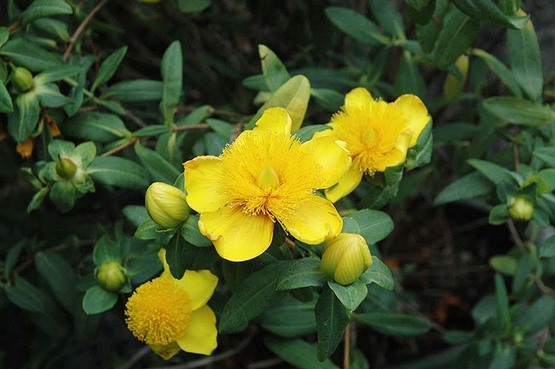 Native to southeast North America,
Sunburst is an impressive 30-inch by 30-inch deciduous shrub. Notable large,
bright golden-yellow flowers bloom in mid-summer atop blue-green foliage. It
has decorative, reddish-brown fruit capsules which look nice in floral
arrangements, and exfoliating bark in winter. This dependable performer, even
in dry conditions, is pest and disease resistant. Rejuvenate it in five or six
years by cutting it back near the ground (stooling) in early spring. Sunburst
works well massed, in border or foundation plantings, or even as a single
accent plant. Hardy in zones 5-8.
|
Leucanthemum x superbum ‘Becky’
(Shasta Daisy)
2004
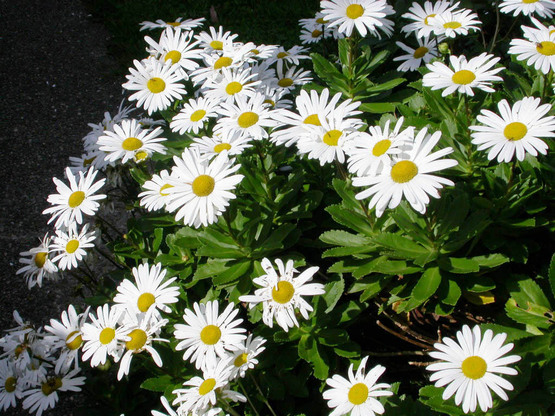 A hybrid born from European species,
‘Becky’ Shasta daisy is a showy, long flowering perennial with white,
daisy-like blooms and dark green, shiny, semi-evergreen to evergreen foliage.
Flowering begins in June and can continue through August with deadheading.
‘Becky’ is favored for its height, reaching up to 3 feet tall and 2 feet wide.
Avoid overhead watering for the best appearance. It is pest-resistant and
requires little maintenance; divide it in spring or after flowering. It is good
for cutting and especially useful in sunny borders, mixed plantings, or in
large masses in moist neutral soil. No major pest or disease problems pose a
threat. Hardy in zones 5-10.
|
Stachys byzantina ‘Helene Von Stein’
(Lamb's Ears)
2006
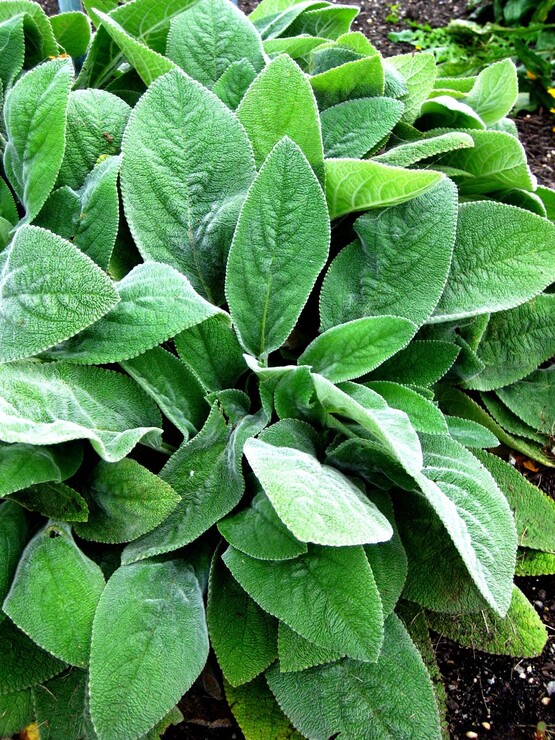 Lamb’s ears is a beautiful perennial
with 6 inch by 2 inch silvery leaves. It grows to about 8 inches tall and
rarely flowers, though an occasional flower spike will appear. Remove or retain
flowers if it’s to your taste. It is considered a clump forming plant but will
continue to spread and create a dramatic groundcover over years. It is a
wonderful specimen plant, edger for borders or walkways and is useful in
seashore, herb, and moon gardens. Plant from containers in fall or spring in
sunny, well-drained, lean soil. This low maintenance plant is also deer and
pest-resistant. Hardy in zones 4-10.
|
Geranium x cantabrigiense ‘Biokovo’
(Hardy Geranium)
2008
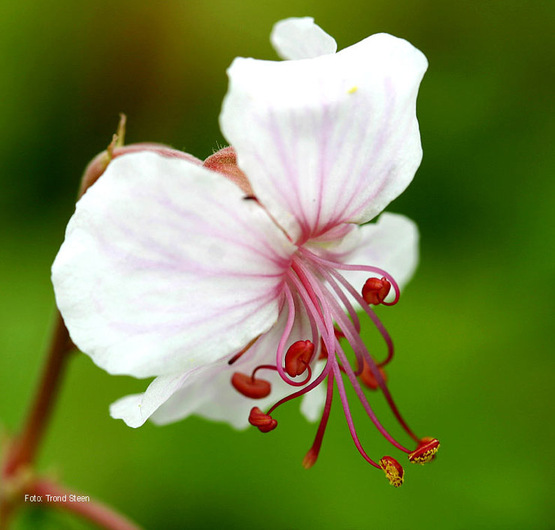 A low-maintenance plant, hardy
geranium spreads moderately fast to form a dense, compact groundcover that
generally grows to 6 inches and occasionally to 12 inches tall. Plant on 12
inch centers or 6 inch for faster coverage. It gives better weed control than
other geraniums and does not need to be cut down after flowering. Its glossy,
green foliage turns reddish in fall. It is tolerant of some shade but produces
even more flowers, which are white to light pink in color, in sun and part sun
locations. Grow it in well-drained soils with moisture during growth. Hardy in
zones 5-9.
|
Salvia nemorosa ‘Caradonna’
(Woodland Sage)
2010
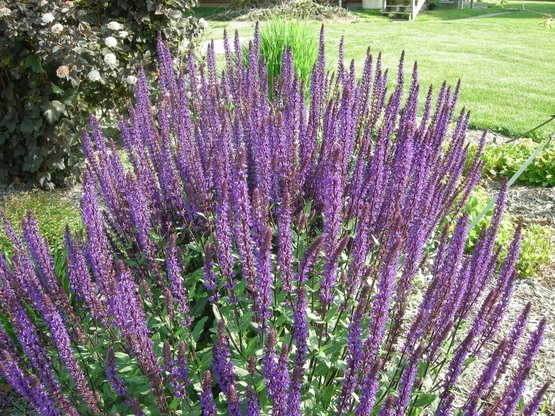 The long-blooming ‘Caradonna’ is a
must-have perennial salvia for your garden. Dark purple flower spikes begin to
flower in June and offer flowers through September, especially if spent flowers
are cut. It’s easily grown in full sun to part shade. ‘Cardonna’ thrives in
Long Island’s sandy loam soils. Other soil types will do fine, but good
drainage is required. Deer rarely browse it because it’s easy to divide and has
aromatic foliage. It pairs beautifully with ornamental grasses in a perennial
border. Hardy in zones 4-8.
|
Baptisia australis
(Blue False Indigo)
2011
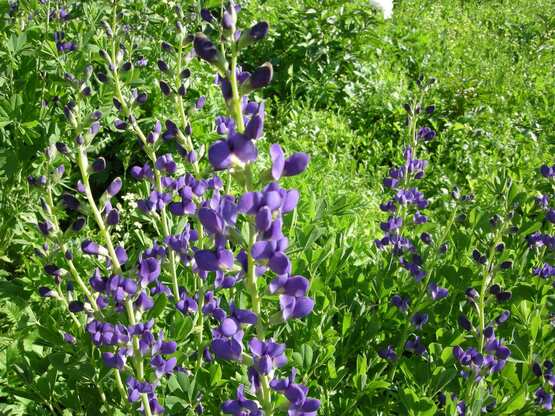 Blue false indigo is an attractive
perennial plant blooming for a month in mid spring with blue flowers—a
hard-to-beat combination. The plant develops into a substantial 4 foot tall
bush rather quickly, maintaining its uniqueness in the landscape until frost.
Use it as a spring specimen, in the mixed border or as a backdrop. The texture
is medium to fine with lovely blue-green leaves in groups of three. Its black
seed pods are 2 ½ inches and ornamental. Blue false indigo grows best in full
sun with average soil. It should be relatively free of pests. Older plants will
develop large clumps in the garden and can be divided after leaf fall and
through winter. The stems and seeds have toxic properties. Hardy in zones 3-9.
|
Amsonia hubrichtii
(Arkansas Amsonia)
2012
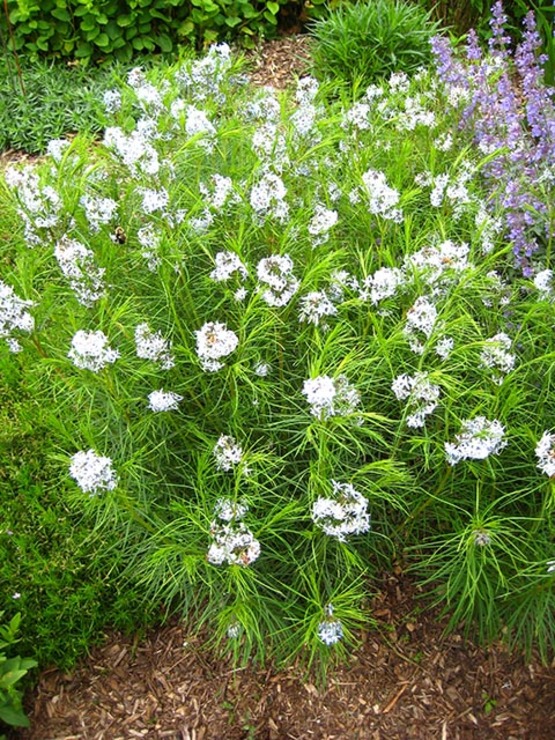 Arkansas amsonia is one of many
species of blue star flowers from North America. In spring, the plant comes
alive with fresh, green, willow-like foliage that contrasts exceptionally with
any neighboring plants. Pale, blue, star-shaped flowers blossom through an
extended spring. The fact that insect and disease-resistance makes this a
low-maintenance perennial is promising, but when the temperatures drop, and you
see the entire plant transition to gold, you will have discovered another must
have perennial for your landscape. Hardy in zones 6-9.
|
Polystichum acrostichoides
(Christmas Fern)
2012
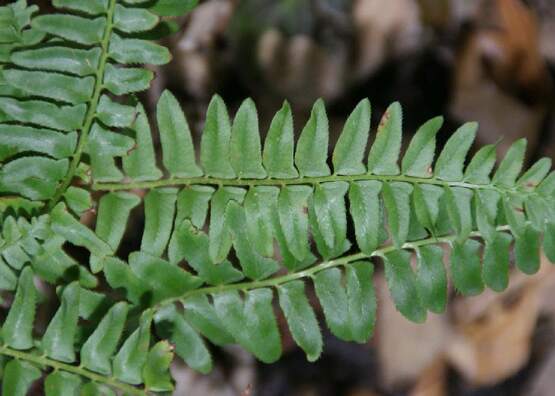 The Long Island native ‘Christmas
fern’ is named such because its thick, leathery, evergreen leaves serve well in
Yuletide displays. This plant slowly clumps to 3 feet wide and rises to about
24 inches tall. Positioned adjacent to bold neighbors such as hosta, the lacy,
dark green fronds of Christmas fern offer ideal textural contrast so important
in shade gardens. Culture is simple as long as the plant is sheltered from
direct afternoon sun and provided soil that is rich and moist. Christmas fern
tolerates drier conditions once established. Winter snowfall may mat down the
previous season’s fronds and simple removal of these leaves before the new
growth flush in mid-spring is advisable for aesthetic considerations. Hardy in
zones 3-9.
|
Nepeta racemosa ‘Blue Wonder’
(Catmint)
2014
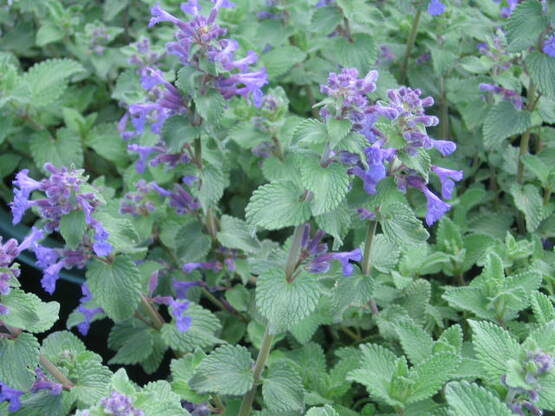 The gray-green, aromatic foliage of
blue wonder catmint along with the profusion of lavender-blue flowers in early
to mid-summer make this perennial a mid-season favorite. The low-spreading
growth habit to 12 inches high makes it a good plant for the front of a border,
along a walkway or in a foundation planting. Catmint is a great plant for hot,
dry locations and prefers sun to partial shade and well-drained soil. After
blooming in late summer, plants can be cut back to encourage another flush of
flowers in fall. This plant is also deer and rabbit-resistant. Hardy in zones
3-8.
|
Coreopsis x‘Full Moon'
(Tickseed)
2015
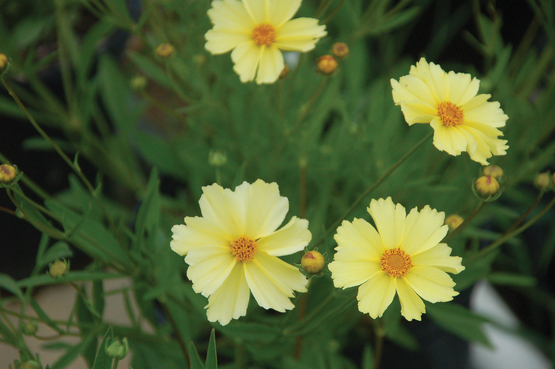 The long-blooming nature and
reliability of this hardy perennial make it a workhorse of the garden. This
wildflower works en masse, as a specimen planting in a mixed border, or in a
container garden. The 3 inch diameter, canary yellow flowers begin to show in
early summer, with re-bloom in fall if sheared. Tickseed has a graceful
mounding habit reaching 16 to 20 inches and 18 to 24 inches wide. Full sun and
average moisture are preferred, although poor soils and drought are tolerated
once established. Hardy in zones 5-8.
|
Paeonia Itoh Hybrids
(Itoh Hybrid Peony)
2016
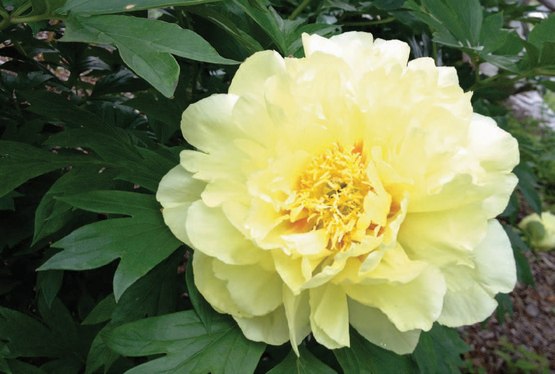 Beautiful, amazing, and mesmerizing
are often used adjectives to describe the flowers of the perennial Itoh
peonies. Itoh peonies are named for Toichi Itoh, the first person to
successfully cross an herbaceous peony with a tree peony in the 1940’s. Itohs
begin to bloom in June, and give a floriferous display for a month or more.
Strong stems support multiple flowers that are held above handsome foliage,
which remains through the growing season. Plant Itohs in full sun and fertile,
well-drained soils, and choose the right site the first time, as Itohs do not
like to be transplanted! Itohs die back to the ground in late fall, so cut back
any remaining leaves then. Hardy in zones 4-9.
|
Catharanthus roseus
(Madagascar periwinkle)
2017
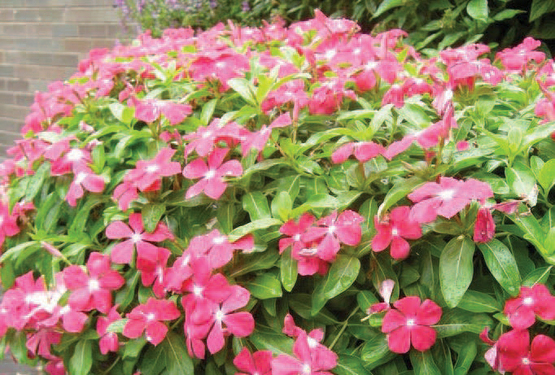 Many of our favorite flowering annuals
wilt as Long Island summers grow hotter and drier. Madagascar periwinkle bucks
this trend as a tropical bedding plant that grows more floriferous as the heat
builds through the season. Given full sun and excellent drainage, its
brilliant, pinwheel flowers in shades of white, pink, lavender and red will
enliven borders, containers and window boxes from May until frost. Most
cultivar series form upright rounded plants 8 to 12 inches tall, though some
newer types trail elegantly. Give Madagascar periwinkle a try if you are tired
of annuals that burn out by July. Hardy in zones 10-11.
|
Polygonatum odoratum ‘Variegatum’
(Variegated Solomon’s Seal)
2018
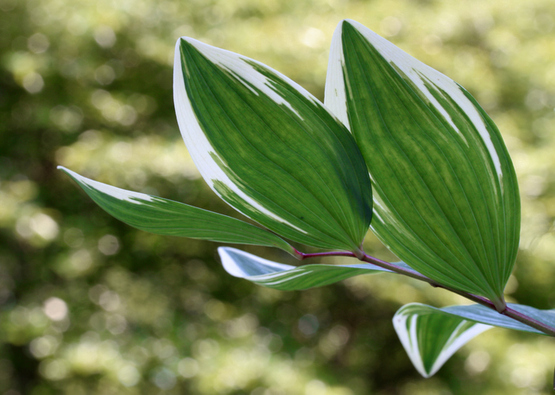 This herbaceous perennial's
greenish-white tubular flowers have a fragrant lily-like aroma and bloom from
late spring to early summer. Following flowering, it’s the variegated,
white-edged leaves that make this the perfect summer-long perennial to spruce
up a woodland garden or shady area of a rock garden. Come fall, the leaves turn
a golden yellow for late-season interest, and then in spring elegant, new stems
emerge with a lovely maroon-red tint that further enhances seasonal interest.
Best grown in moist, organically rich, and well drained soils in part-shade to
full shade. This perennial grows 18 to 24 inches in height. No serious problems
pose a threat. Hardy in zones 3-8.
|
Alchemilla mollis
(Lady’s Mantle)
2019
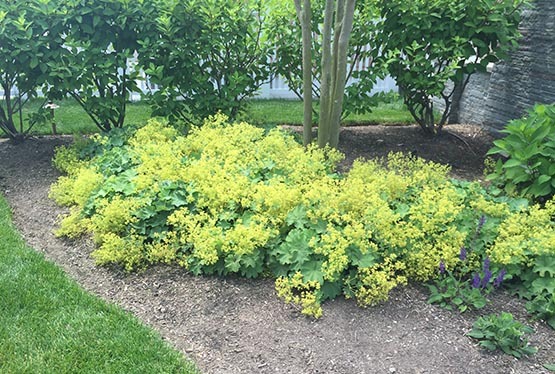 Native to eastern Europe, this
clumping, mound-shaped perennial offers attractiveness along the garden path or
repeated within a mixed border as it complements all designs. In June, clusters
of small star-shaped flowers borne on 1-foot stems cover the plants, giving
this plant a maximum height of 24 inches while in bloom. The chartreuse flowers
and wide serrated, lobed leaves perfectly capture droplets of water that
reflect sunlight and more. To encourage a second bloom in late summer, deadhead
in mid-July. Plant in full sun to shade in moist, organic soils; flowers best
with more light. Hardy in zones 3-8.
|
Helleborus x ballardiae ‘HGC Pink Frost’
(Helleborus Winter Jewels® Series and
Gold Collection®)
2020
 Hellebores are low-growing, herbaceous
perennials with palmate, evergreen foliage. Their most impressive feature is
their five petaled, bowl-shaped flowers, which appear as early as December but
more often in late winter into spring. The Winter Jewel Series® and Gold
Collection® cover a wide spectrum of flower colors and forms including,
singles, doubles, anemone-flowered, speckled, picoted, veined and more. The
pictured Gold Collection® Helleborus x Pink Frost is a big and bold variety
with large flowers in multiple shades of pale to rosy pink. Early,
long-blooming, upward-facing flowers rise above the foliage, which offers
combinations of silvery green leaves with red stems. Hellebores in general are
low-maintenance, but prefer a moist, well-drained, acidic soil sited in a
partially shaded woodland. They are adaptable, however, to most landscape
situations (including containers) and in even in areas with high deer pressure
as hellebores are deer-resistant since they are poisonous. Hardy in zones 5-8.
|
Begonia grandis
(Hardy Begonia)
2021
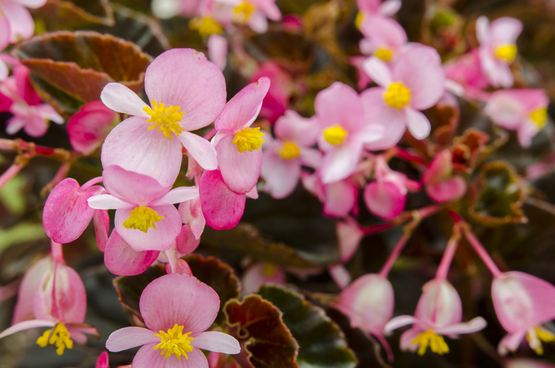 This pale pink flowering herbaceous
perennial is a noteworthy begonia because it can withstand harsh winter
conditions and it brightens up shady spots in your garden. It has an upright,
bushy habit with lush, waxy green leaves. Starting in late summer, it carries
an abundance of small, pink flowers through until frost. Hardy begonia grows
well in many soil types including wet soil conditions; however, good drainage
is a must. Shade and partial sun are best; avoid siting in full sun. The plant
happily self-sows, but it is not invasive. Hardy in zones 6 through 9.
|
Persicaria affinis
(Fleece flower)
2023
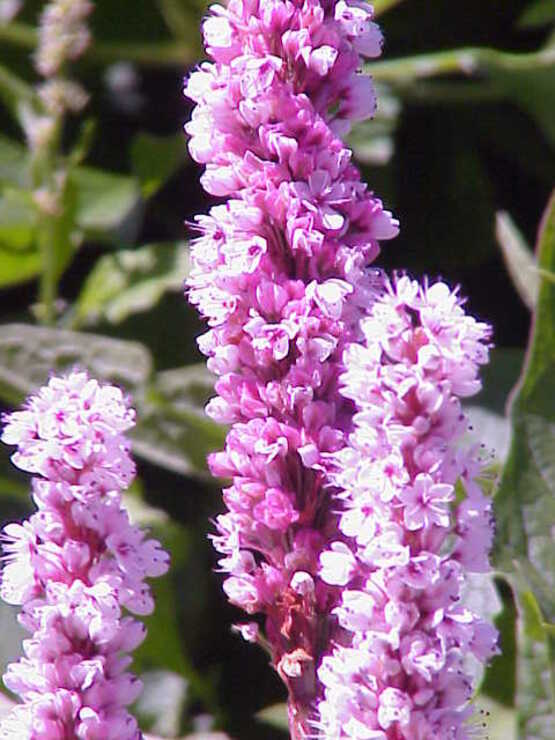 Native to China and the Himalayas,
Fleece flower is a low-maintenance perennial groundcover, growing up to 1 foot
tall and 2 feet wide. It has attractive, lance-shaped foliage and long spikes
of small red-to-pink flowers which bloom profusely in mid to late summer.
Leaves turn to a bronze in the fall. Thrives in full to partial sun in moist,
well-drained soils, but tolerates dry conditions once established. Pest-free
and disease-resistant. Hardy in zones 5-8.
|
Anemone canadensis
(Canada Anemone)
2024
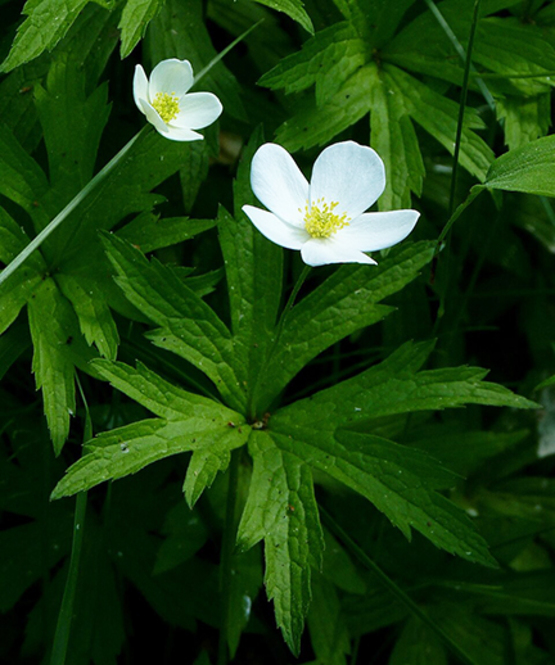 Native to the Northeast U.S., this
herbaceous perennial is a useful groundcover and important for wildlife. It
performs best in part shade to shade, and can take full sun if soil is moist.
Prefers moderate to moist soil, but has demonstrated drought tolerance in shady
areas. Flowers typically appear between May and June, as bright white,
upward-facing cup-shaped flowers on 1–2-foot stems. Each flower has 5 rounded
petals. The Canada Anemone flower’s feature the genus’ signature prominent
stamens in a pale yellow. Foliage is deeply lobed and showy, reaching 1-2 feet
in height, with 1-3-foot spread. It has a delicate appearance, but is a very
hardy and resilient perennial. Unlike many other spring-blooming anemones, the
Canada Anemone’s foliage is not ephemeral, and can stay lush and green until
freezing temperatures in early winter. It is an adept rhizomatous spreader,
forming a weed-smothering groundcover, and covers quickly once established.
Extremely low maintenance; while it can be aggressive in ideal conditions, it
is easy to divide and remove where desired. Suitable for mass planting,
woodland shade gardens, lawn-replacement, erosion control, restoration,
pollinator gardens. Provides pollen for many species of native bees, attracts
beneficial predatory wasps. Hardy in zones 3-8.
|
Monarda punctata
(Spotted Bee Balm)
2025
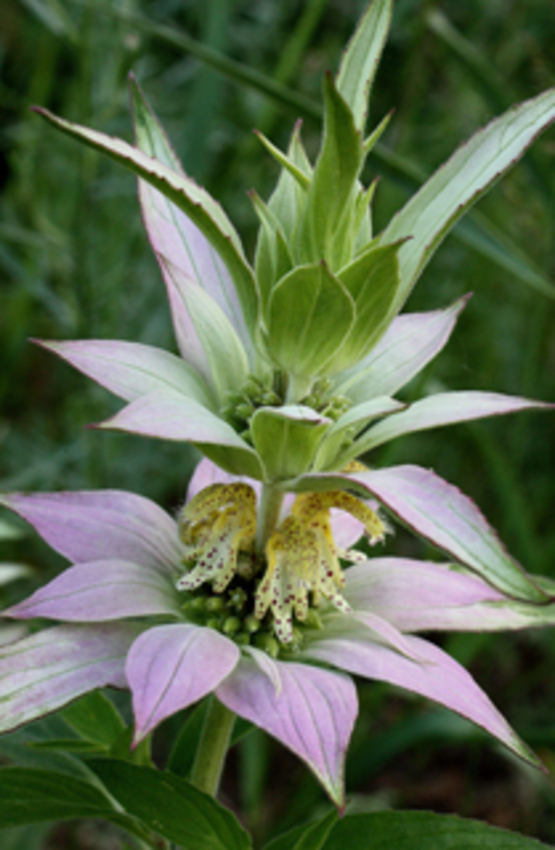 Spotted Bee Balm is a fragrant and
ornamental native perennial, suitable for a wide variety of landscapes. It is a
shorter-lived perennial, but self-sows proficiently and spreads by runners to
create large, long-term clumps. It is suitable for full sun to part shade
areas. Prefers medium to dry soil. It is very drought-tolerant once
established, however if in a hot dry location, supplemental water can help
extend bloom time and keep foliage lush. Up to 3 feet in height, will be
shorter in dry conditions, usually between 1.5 - 2.5 feet tall. Flowers usually
appear between May - August. They are small and tubular, forming in dense
clusters, reminiscent of other bee balms, but in a pale yellow with
maroon-brown spots. Multiple flower rosettes form stacked atop each other on
elongated stems. Each whorl of flowers is supported by prominent bracts. The
bracts are much showier than the flowers, and the main ornamental feature: a
light whitish-pink, with wide blades that come to a point, lasting from forest
blooms until frost. The large, bright bracts make the plant appear to be
flowering from afar, long extending the plant's ornamental value. Very fragrant
foliage, similar to other bee balms, but with a more herb-like, oregano slant.
Extremely valuable to a wide variety of beneficial pollinating insects,
including the endangered Karner Blue Butterfly. Deer and rabbit-resistant.
Tolerant of poor soil. Notably more resistant to powdery mildew than other Bee
Balm species. Hardy in zones 3-9.
|
Pycnanthemum tenuifolium
(Narrowleaf Mountain Mint)
2026
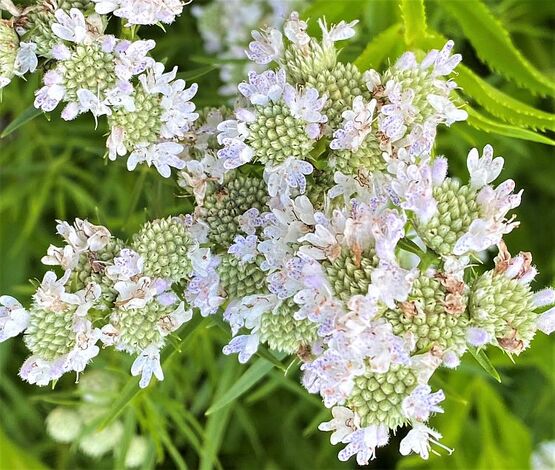 Narrowleaf Mountain Mint,
also sometimes called Slender Mountain Mint, is a native herbaceous perennial
valuable for many garden and landscape applications. It is suitable for sun to
part shade, and a variety of soil types from poor and dry to moist and rich. It
has dense, fine-bladed foliage on upright, multiple-branching stalks. The
foliage texture provides ornamental value, especially when in masses or
swathes. Reaches 1.5 to 2.5 feet tall (taller in moist soil), with dense flower
clusters appearing atop the vertical stems. Flowers typically bloom starting in
June and can last into September, or later. Flower clusters are bright white
with faint lavender-purple spots. Foliage has a potent minty fragrance. Equally
suitable in an intimate garden, low flower meadow, or open woodland setting.
Important pollinator attracting plant, attracts a huge variety of species of
native bee and butterfly species. Seeds are also eaten by wildlife. Deer and
rabbit-resistant. Hardy in zones 4-9.
|