Parrotia persica
(Persian Ironwood)
2009
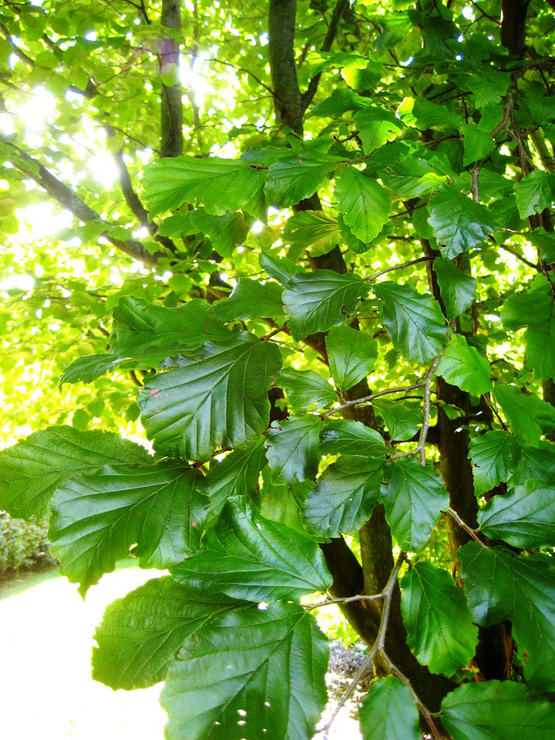 Persian ironwood is a deciduous tree
which makes a fine specimen. With simple, lustrous, dark green leaves, it is
easy to grow and resistant to attacks from both insects and disease. Persian
ironwood attains a height of 30 to 40 feet and can be single or multi-stemmed
with an oval rounded habit. In late winter it produces an abundance of
half-inch, dark red flowers at spring flush. A relative of witch-hazel and
fothergilla, this tree shares similar leaf shape and autumn colors which range
from yellow to orange to scarlet. As the tree ages its seasons of interest are
extended with mottled bark colors of olive green, gray and beige. Hardy in
zones 4-8.
|
Carpinus betulus ‘Frans Fontaine’
(European Hornbeam)
2011
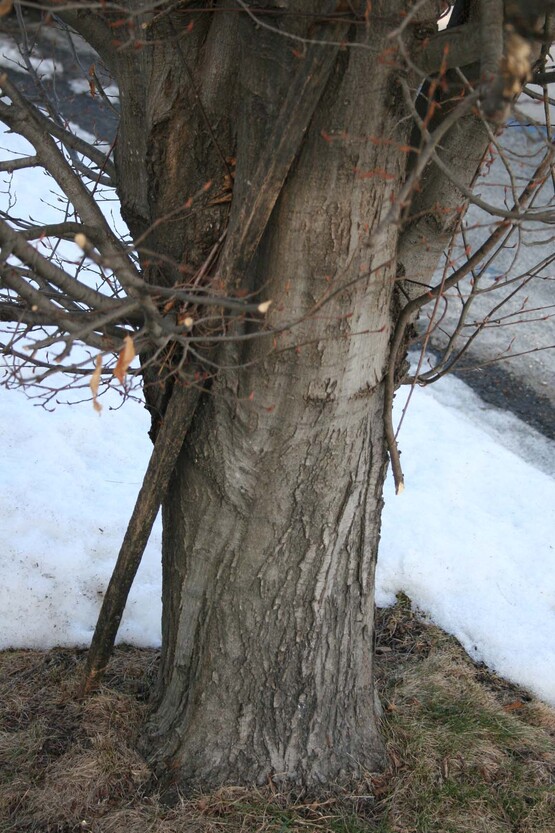 ‘Franks Fontaine’ is an excellent
shade tree selected for its sleek, narrow-growing form. A mature tree grows to
40 to 50 feet tall and only 20 feet wide. This tree does not lose its columnar
form with age. It has dark green dense foliage that makes it excellent for use
as an accent, specimen or for hedging. Hornbeams are drought-tolerant, insect
and disease-resistant and are extremely hardy. They grow best in full sun and
are also deer-resistant. Hardy in zones 4-8.
|
Acer griseum
(Paperbark Maple)
2012
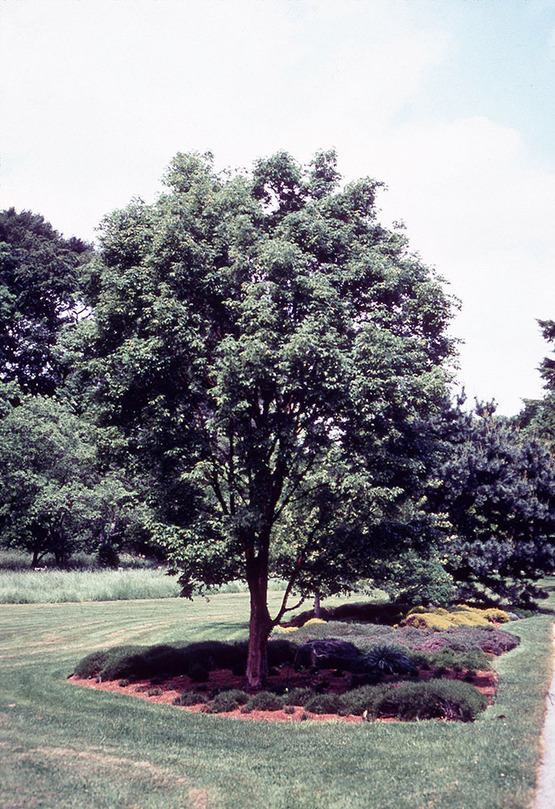 Unlike several species of maple,
paperbark maple is not invasive, messy or prone to breakage. Its trifoliate,
dark green leaves turn brilliant shades of orange, red and burgundy. But the
real attraction of the fine small tree is the stunning, cinnamon-brown to
mahogany-colored, flaking bark that is especially noticeable in winter. This
upright, slow-growing tree will reach 25 to 30 feet tall with about half the
spread. Paperbark maple prefers moist, well-drained, organic soil and full sun
or partial shade. It has no major pest problems and requires little to no
pruning. Paperbark maple makes an excellent specimen in a residential garden
and you can even grow herbaceous perennials under its dappled shade. Hardy in
zones 4-8.
|
Quercus palustris ‘Green Pillar’
(Green Pillar Pin Oak)
2013
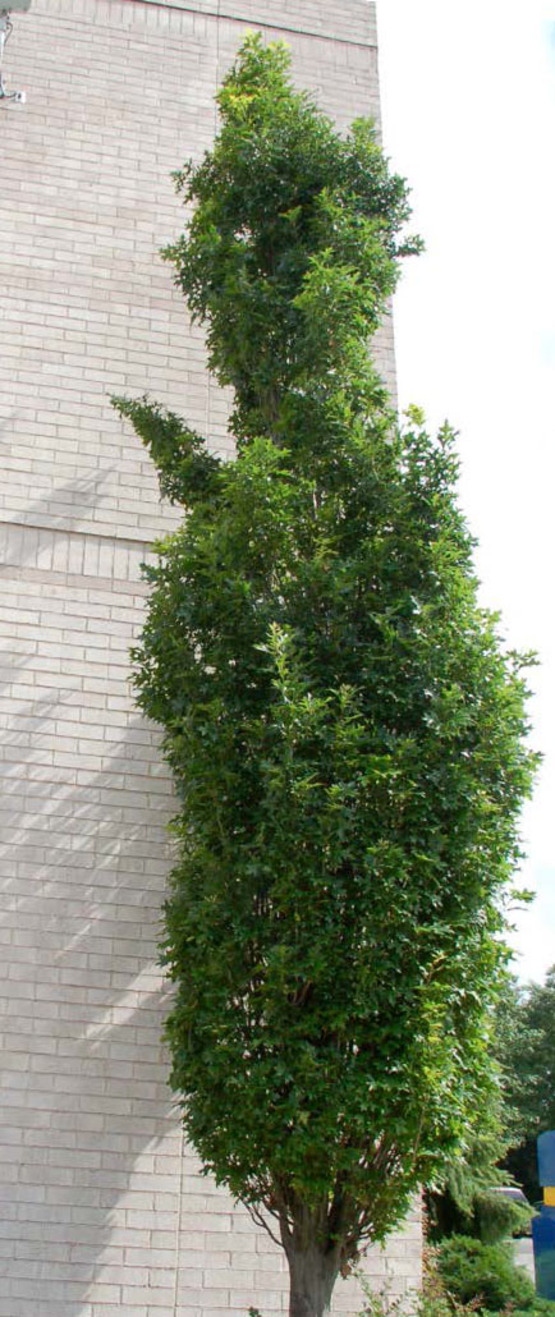 This tall shade tree is rather unique
with a tight, upright habit eventually reaching 50 feet tall and only 12 feet
wide. The dark green leaves turn shades of deep red to maroon in the autumn.
Because this variety does not reach the size of other oak tree species, it is
ideal for areas of the landscape with limited width. Moist soils and full sun
or partial shade are best. However, it can tolerate poorly drained soils as
well as some flooding. ‘Green Pillar’ might take up to 20 years to produce
acorns. Watch out for chlorosis, which poses a huge threat to this tree. Hardy
in zones 4-8.
|
Nyssa sylvatica
(Black Gum, Tupelo)
2017
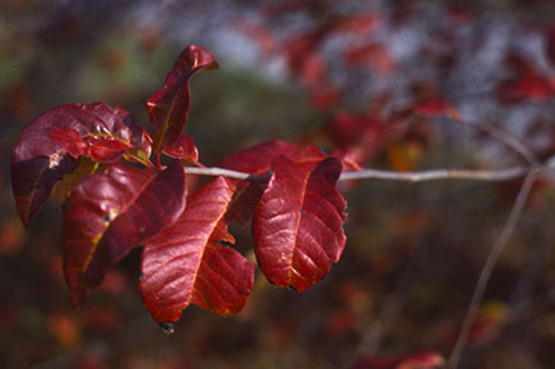 This Long Island native deciduous tree
offers toughness, adaptability, longevity and stunning fall interest. Lustrous,
dark green foliage begins to turn brilliant shades of reddish maroon or orange
beginning in September. In the fall, some plants will exhibit blackish blue
berries that attract birds. Slowly reaching a mature height of 40 to 60 feet,
tupelo has a statuesque, pyramidal growth habit, and an interesting, blocky
bark pattern at maturity. Though generally found growing near swampy coastline
areas, tupelo readily adapts to a wide range of growing and soil conditions,
and is equally trouble-free. Red Rage® is a uniform, upright grower with a
strong central leader and outstanding red fall foliage. ‘Zydeco Twist’ is a
semi-dwarf form with a contorted growth habit. Hardy in zones 4-9.
|
Betula nigra ‘Little King’ Fox Valley™
(River Birch)
2018
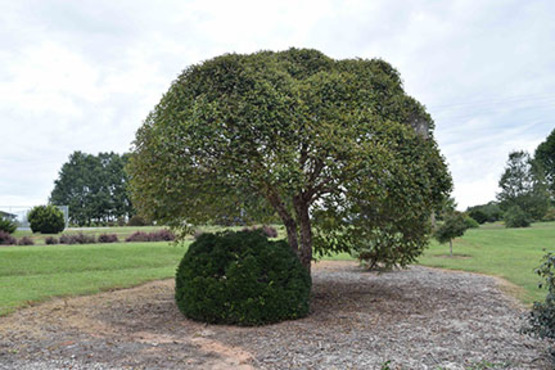 This native, deciduous tree has an
exfoliating orange to brownish bark and diamond-shaped dark green leaves that
turn yellow at the margins in the fall. Native to riverbanks and floodplains in
New York, ‘Little King’ is a dense and multi-stemmed cultivar, which can grow
to 20’ feet tall with a 12 foot spread. This tree is best grown in medium to
wet soils in full sun to part shade. Ideal for wet sites or in a rain garden,
this birch is also suitable for a lawn or park. Luckily, the river birch is one
of the most disease-free birches. Particularly hot summers can weaken the tree
and make it susceptible to the bronze birch borer, but when grown in cool,
northern climates, the river birch will thrive. Hardy in zones 4-9.
|
Taxodium distichum
(Bald Cypress)
2018
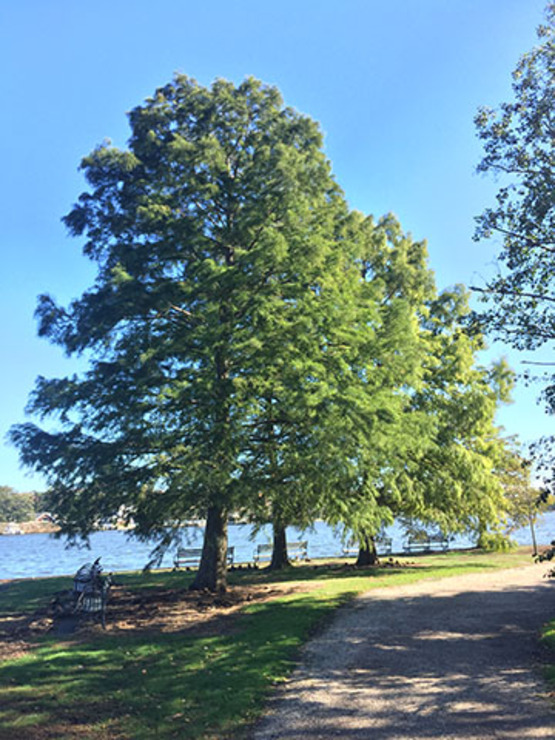 With soft, feathery yellow-green
foliage that turns orange/cinnamon-brown in the fall, this pyramidal conifer is
perfect for a unique landscape accent. Even though bald cypress gives the
appearance of an evergreen tree, leaf drop in the fall is perfectly normal and
its fall color display is outstanding. It grows up to 50-70 feet tall and its
small cones change from purple-green to brown as they mature. Although bald
cypress is native to southern U.S. swamps and bayous, when cultivated it can
grow well in drier, upland soils. These trees, aside from very minor twig
blight, experience few problems. ‘Cascade Falls’ is a compact, weeping form
that can grow up to 20 feet tall. ‘Peve Minaret’ is a compact form growing 10
feet tall and 6 feet wide. Hardy in zones 4-10.
|
Acer triflorum
(Three-flowered Maple)
2020
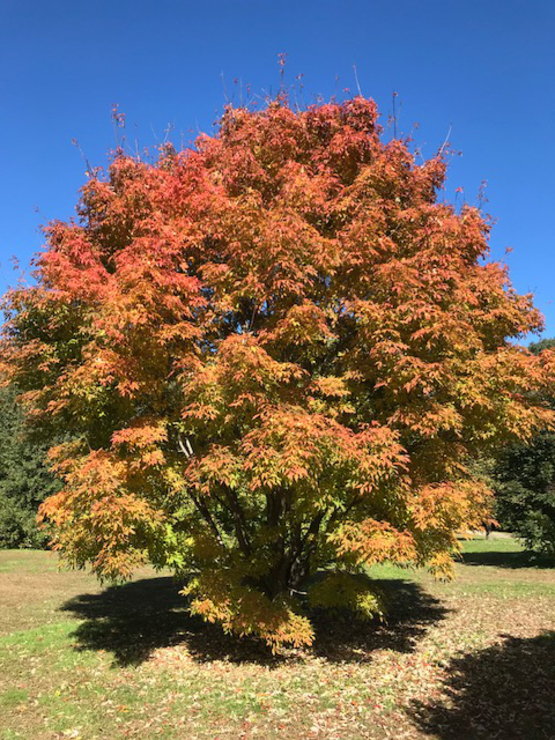 This small, deciduous tree, along with
the 2012 Gold Medal winner Acer griseum, is a trifoliate maple ideal for any
residential landscape as a signature tree. It has a striking golden amber bark
with vertically fissured streaks and, come autumn, its leaves turn brilliant
colors of red and yellow. Reaching a mature height of 20 to 30 feet, growth
habit and shape are uniformly rounded, with both single- and multi-trunked
specimens exhibiting full, dense crowns. The three-flowered maple is very
adaptable to a wide range of growing and soil conditions and is trouble-free.
In fact, it is so special that Michael Dirr, renowned horticulturist and
professor of horticulture at the University of Georgia, refers to this species
as “one of my favorites; the bark and fall color cannot be adequately described
in words.” Hardy in zones 4-7.
|
Quercus phellos
(Willow Oak)
2021
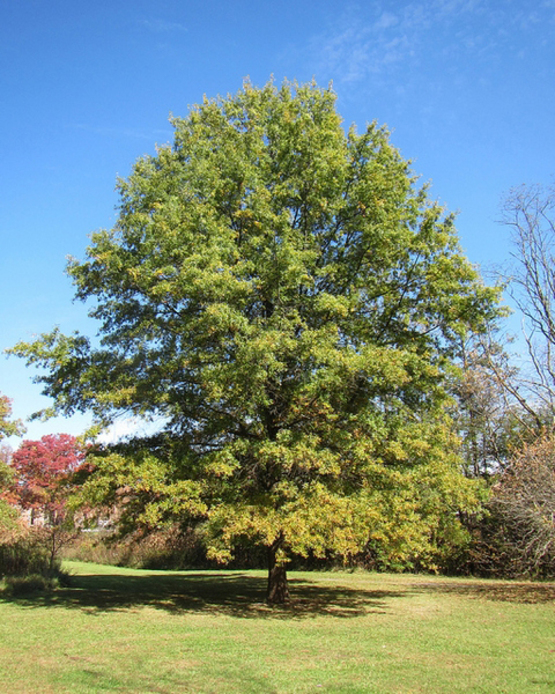 Oaks are among our most noble trees,
but the selection of long-time favorites such as red oak (
Quercus rubra) and
pin oak (
Q. palustris) should be reconsidered due to disease problems and
incompatibility with our warming climate. Willow oak (
Q. phellos) stands tall
(60 to 75 feet) as a superior alternative worthy of increased use locally as a
street and shade tree in residential, commercial, and municipal settings. With
a range that extends from Long Island south to the Gulf Coast, willow oak is
both cold hardy and performs superbly in our increasingly hot, humid, and dry
growing conditions. Its short, narrow leaves are unlobed and more closely
resemble a weeping willow than most familiar oaks. These glossy green leaves,
which transition to orange and yellow before dropping, create minimal leaf
litter unlike many traditional shade trees. Willow oak thrives in sunny sites
with fertile soil that is moist or seasonally wet. It is an excellent choice
for areas with polluted air and winter salt exposure. Oaks are important
keystone plants that provide an abundance of habitat benefits as well. Hardy to
zones 5 through 9.
|
Ginkgo biloba
(Ginkgo)
2022
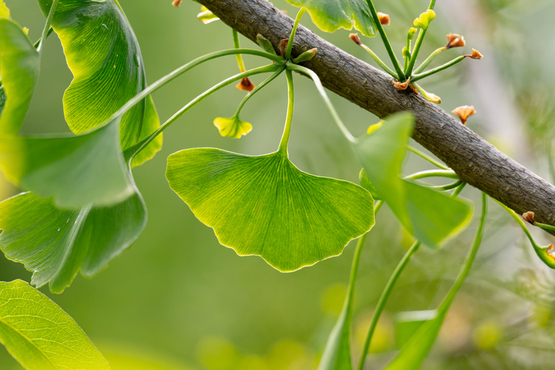 One of the toughest and oldest tree
species on earth, ginkgo is a versatile deciduous tree suitable for challenging
urban landscapes or spacious yards. There are many cultivar selections that can
suit your design or site needs. The fan-shaped leaves of this elegant tree are
unique in shape and their fall senescence; leaves turn a bright yellow come
fall and drop all at the same time, making fall cleanup easier. Best planted in
full sun. Ginkgo is resistant to many pests and diseases, including Asian longhorned
beetle. Deer don’t eat it either. Be sure to water during drought periods.
Though native to Southern China, it is not invasive. While Ginkgo can grow
large, several semi-dwarf to dwarf cultivars worth adding to a smaller garden
include ‘Fastigiata’, ‘Jade Butterfly’ , ‘Majestic Butterfly’, ‘Mariken’,
‘Munchkin’ and ‘Spring Grove’. Before purchase, be sure the tree is male, as
ginkgo trees are dioecious. This will assure fruitlessness. If it's a female
tree, as it matures, it will produce extremely malodorous fruits as soon as
they begin to ripen. Hardy to zones 3 through 8.
|
Liquidambar styraciflua
(American Sweetgum)
2023
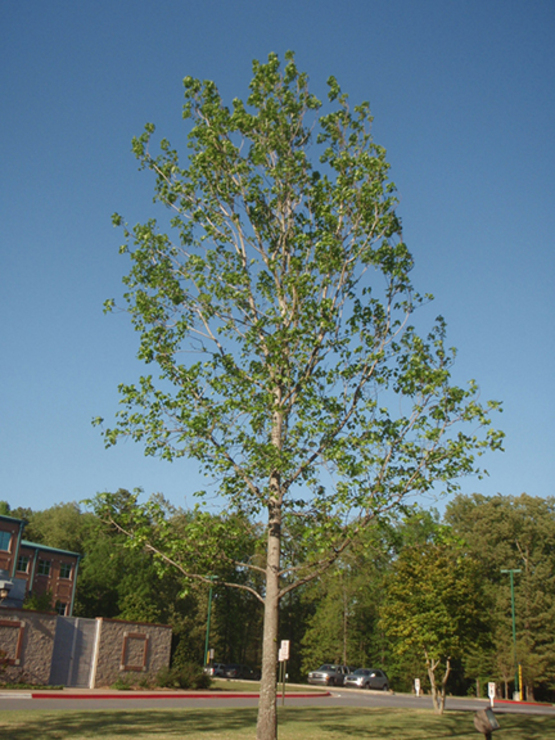 Native to the Eastern U.S., American
sweetgum is a fast-growing, deciduous tree with outstanding fall color. The
green, star-shaped leaves change to a brilliant yellow/orange to deep red come
fall. Typical form is that of a large, shade tree with a mature height of
upwards of 100 feet Cultivars as ‘Slender Silhouette’ provide a more fastigiate
form and mature height of 40 feet Site in full sun; moist soils are preferred,
but sweetgum is also tolerant of poor urban soils. Spiky seedheads are a trait
of this species, but the fruitless cultivar 'Rotundiloba' is widely available.
‘Slender Silhouette’ offers a strongly upright, columnar growth habit and tends
to produce less fruit than the species. ‘Rotundiloba’ is a unique for with
rounded lobed leaves rather than the traditional pointed, star-shaped leaves of
the species. ‘Variegata’ displays striking leaves with irregular patters of
that are spots and streaks of golden yellow. No major pests or diseases. Protect
young trees from deer browse. Hardy in zones 5-9.
|
Parrotia subaequalis
(Ironwood)
2024
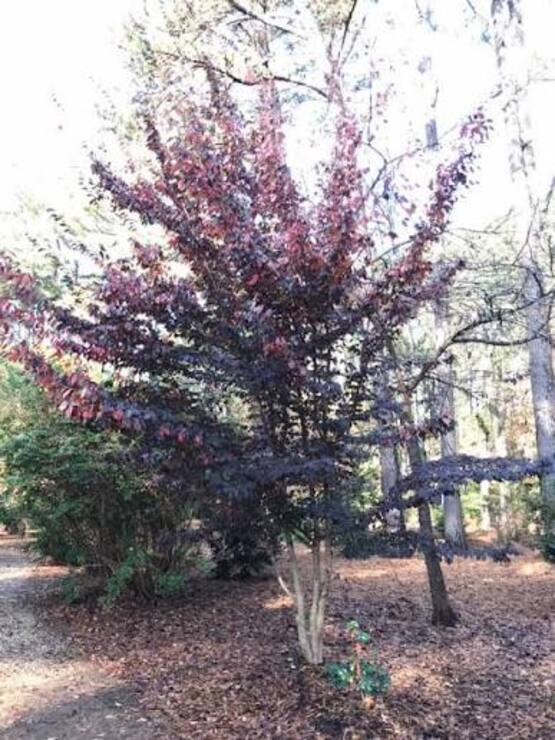 Native to eastern China, Parrotia is a
medium sized deciduous tree, growing from 20 to 30 feet tall and 15 to 20 feet
wide. Notable for a rounded crown, exfoliating bark, and spectacular fall
foliage colors ranging from burgundy to pink. Blooms with small, reddish
flowers in early spring and prefers full sun to partial shade in moist,
well-drained, slightly acidic soil. Generally pest and disease-free. Hardy in
zones 5 to 8.
|
Quercus bicolor
(Swamp White Oak)
2025
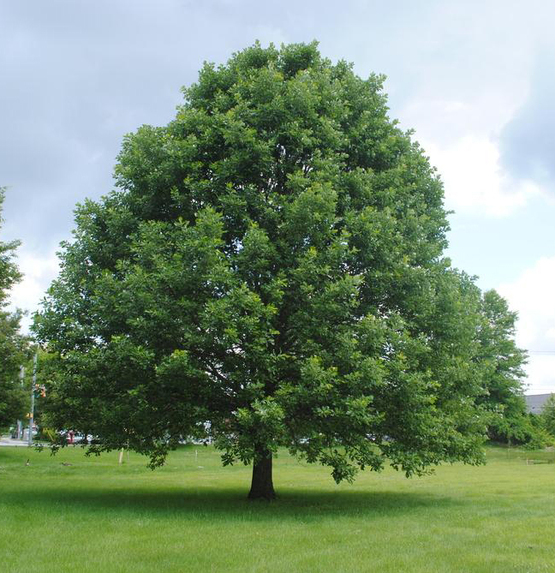 Native to the swamps of Missouri,
Swamp White Oak is a large, deciduous oak tree with glossy green upper leaf
surfaces and silvery-white undersides. Growing to 50 to 60 feet tall, it
provides excellent shade and blooms from April to May. In fall, its leaves turn
yellow but may become reddish purple. Prefers moist, acidic to neutral soils
and full to partial sun. Relatively pest and disease-resistant. Hardy in zones
3-8.
|
Cercidiphyllum japonica
(Katsura Tree)
2026
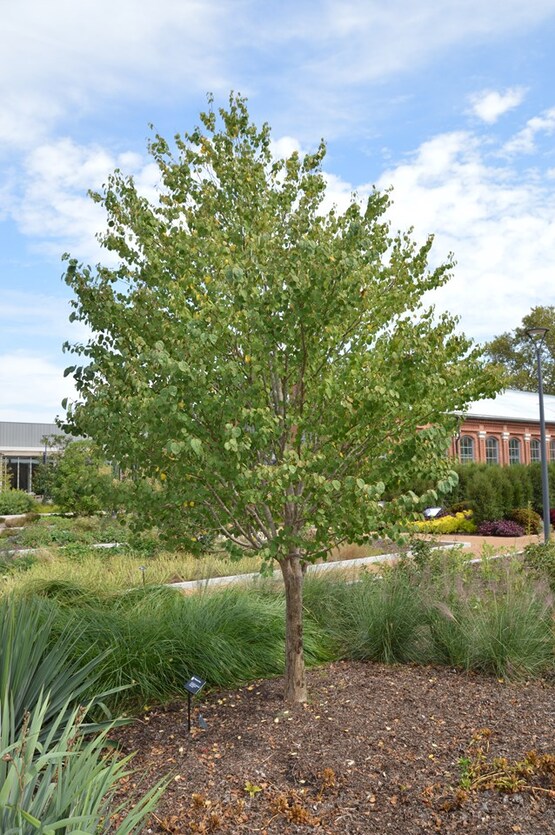 Native to Japan and China, this
fast-growing deciduous shade tree develops into a large specimen reaching 60
feet plus in height and width, but there are several cultivar options that
remain more compact. The rounded, almost heart-shaped leaves emerge bronze in
spring and mature to a lustrous blue-green. In fall, leaves turn into brilliant
shades of yellow, apricot, orange, and maroon and emit a sweet fragrance that
mimics cotton candy. Katsura trees thrives in well-drained, moist soil and is
not tolerant of windy and dry sites. Not suitable for planting near
foundations, driveways, and septic systems because of its aggressive, fibrous
root system. Katsura tree is ideal as a specimen tree in a lawn setting in full
sun or partial shade. Hardy in zones 4-8.
|