Daphne x transatlantica ‘Jim’s Pride’
2003
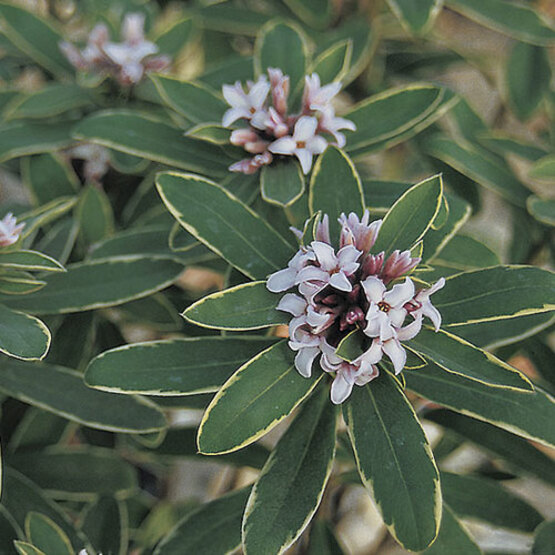 Named for Jim Cross of Environmental's
Nursery, Long Island, ‘Jim’s Pride’ is a wonderful small shrub, growing to
about 4 feet tall by 4 feet wide. Beginning in May, fragrant white flowers
cover the attractive grey-green leaves, which remain throughout the year.
Flowers will continue until frost and may sporadically appear during warm days
of winter. An ideal plant for small gardens and edging, plant in partial shade
and moist, well-drained soil. If you wish to plant in an area with heavy clay,
raise your plantings for optimal results. Hardy in zones 5-9.
|
Fothergilla gardenii
(Dwarf Fothergilla)
2000
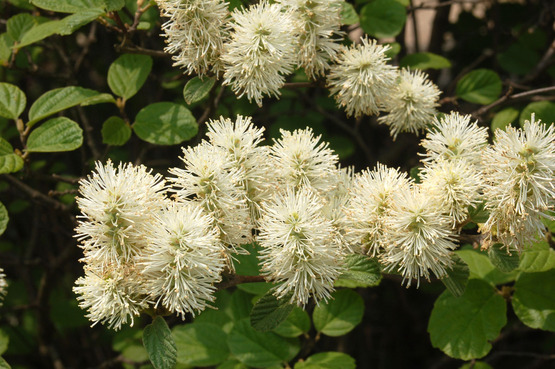 Native to the southeastern United
States, this shrub grows in sun to partial shade and prefers moist,
well-drained organic soils. Though slow growing, this plant reaches a height of
2 to 3 feet and develops a rounded shape, which can be impressive in small
gardens. During late April to early May, it produces striking white, fragrant,
bottlebrush-shaped inflorescences. Its outstanding fall foliage ranges from
brilliant yellow to orange and scarlet. Relatively pest and disease-free, this
versatile plant can be utilized in a woodland situation, mixed border, mass
planting, or as a part of a foundation planting. Hardy in zones 5-8.
|
Corylopsis pauciflora
(Buttercup Winterhazel)
2000
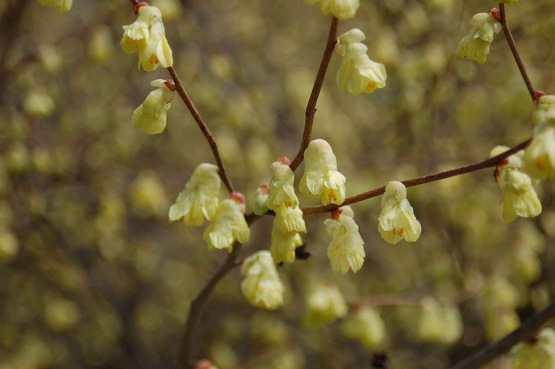 Native to Japan and Taiwan, Buttercup
winterhazel is a deciduous shrub that flowers yellow, bell-shaped blossoms in
April just before the leaves unfold. Rich, dark green leaves turn yellow in
October. This plant thrives when planted in part shade in moist, acidic soil,
away from high winds. Plants spread slowly by easily controlled suckers to 8
feet wide and 6 feet in height. It is wonderful for use in woodland situations
and mixed with other ericaceous plants. Little maintenance is needed for this
pest-free and attractive shrub. Hardy in zones 6-8.
|
Cephalotaxus harringtonia ‘Duke Gardens’
(Plum Yew)
2001
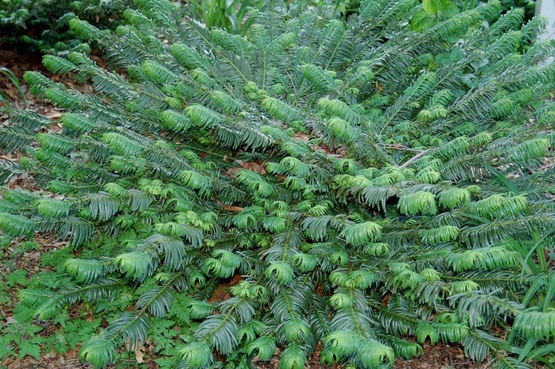 Native to Japan and parts of China,
Duke Gardens is a small yet gracefully spreading conifer. Its desirable, almost
black-green needles and mounded shape make it usable as a 2 to 3 feet. high, 3
to 4 feet. wide accent plant, or in a regal, mass planting. This conifer
performs best placed in a wind protected, light shade area in well-drained
soil. Duke Gardens is drought tolerant once established and can also withstand
heavy shade. This slow-growing refined and deer-resistant conifer will be a
welcome and elegant replacement for the common yew (Taxus baccata), which is
under attack by deer. Hardy in zones 6-9.
|
Viburnum dilatatum ‘Erie’
(Linden Viburnum)
2002
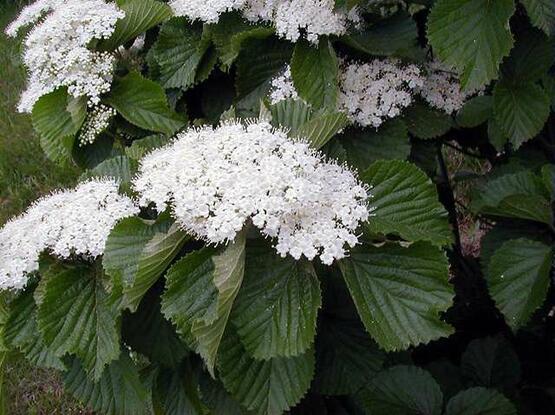 Native to East Asia, ‘Erie’ is an
adaptable shrub with a broad, rounded growth habit. Medium-sized at maturity,
this plant grows up to 10 feet tall and 6 feet wide. In late May to early June,
it bears flat cymes of creamy-white flowers, followed by red fruit that turns
coral after frost. Glossy green foliage transitions from yellow orange to rust
in fall. The fruit attracts birds. This plant needs a buddy! Plant two or more
linden viburnum together, as single plants don’t fruit well. Use as a specimen,
in shrub borders and mass plantings, or even as a hedge. Grow it in full sun
and in moist soils. Hardy in zones 5-7.
|
Clethra alnifolia ‘Compacta’
(Summersweet)
2003
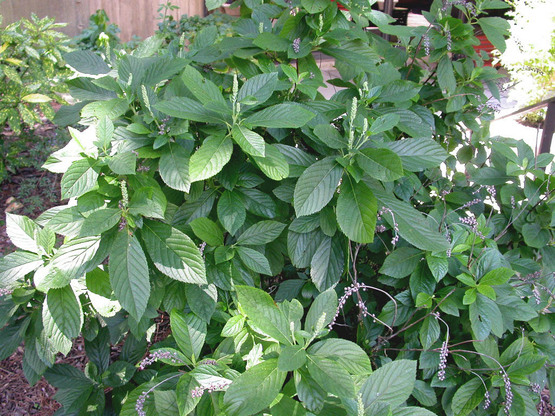 Native to the wetlands of eastern
North America, including Long Island, ‘Compacta’ is a dense, multi-stemmed
shrub reaching 4–5 feet tall and about 6 feet wide. In July, a profusion of
fragrant white flowers appears. In fall, its rich, dark green foliage turns an
attractive yellow. While tolerant of a wide range of conditions, this plant
does best in partial shade in moist soils. It’s useful in shaded gardens,
seashore plantings, foundation plantings, and can be massed or used as a
complement to perennials in a mixed border. Hardy in zones 3-9.
|
Hydrangea quercifolia
(Oakleaf Hydrangea)
2005
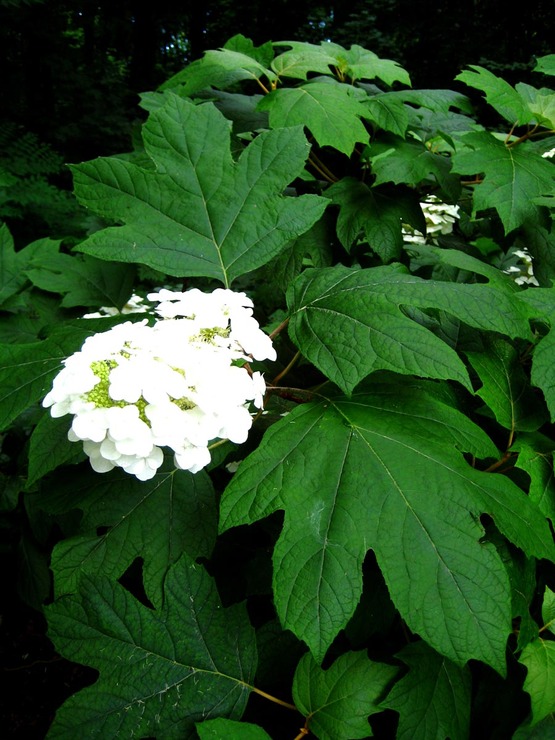 Oakleaf hydrangea is a dramatic,
summer-flowering shrub with creamy, white, cone-shaped flowers up to 1 inch
long that age to purplish pink. Deep green, oak-leaf shaped leaves turn shades
of red, orange and purple in fall. Use as a specimen, in the shrub or mixed
border, or on a woodland edge. Its mature size is about 8 feet tall and 10 feet
wide, though it could be kept smaller by pruning. It will grow in partial
shade, but full sun produces the most flowers and the best fall color. On older
plants, peeling crimson bark adds winter interest. It does well in moist,
well-drained, fertile soil. Mulch around it to keep the root zone cool. Its
loose growing habit is well suited to naturalist gardens. Hardy in zones 4-8.
|
Rosa ‘Radyod’
(The Blushing Knock Out® Rose)
2006
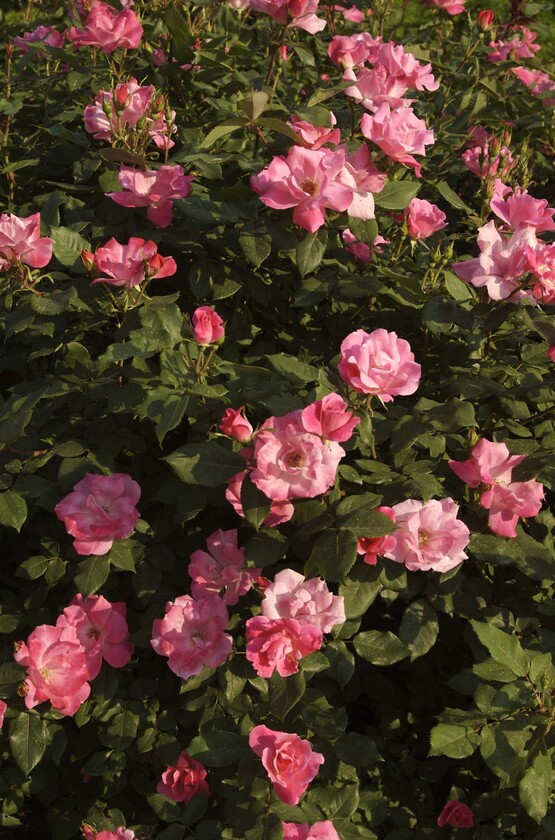 ‘Radyod’ is a pale-pink shrub addition
to the tough and durable Knock Out® rose group. It has been bred to resist
blackspot, mildew, and Japanese beetles, and to produce profuse light pink
flowers which change into shell pink, 3 to 3 ½ inch blooms as they age. Plant
container grown specimens into rich, well-drained soil in spring where they
will receive 5 or more hours of sun and mulch with 2 inches of organic mulch.
To improve flowering and performance, use slow-release fertilizers in a
constant feed program and liquid fertilizer in spring when growth resumes. Use
it as a specimen, foundation planting, mixed border, or as a colorful hedge.
Hardy in zones 4-9.
|
Hibiscus syriacus ‘Diana’
(Rose-of-Sharon)
2006
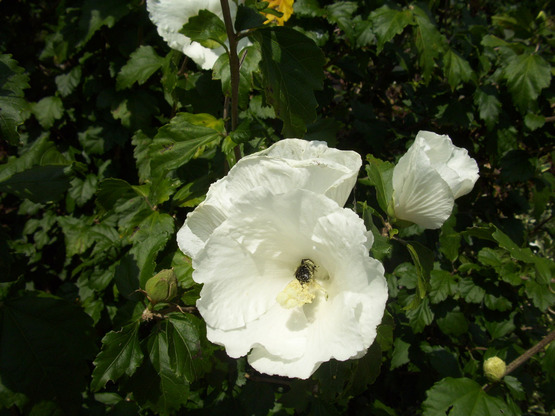 ‘Diana’, a deciduous shrub, is vastly
superior to the old-fashioned Rose-of-Sharon. Its 6 to 7 foot height and
slightly less wide habit is more refined, has better glossy, dark green
foliage, a profusion of terrific waxy, ruffled, pure white 4 inch flowers from
July to October, and most of all, does not produce masses of pesky seed and
seedlings. Plant it in spring or fall in decent, well-drained soil in part to
full sun locations. It is highly adaptable to a wide range of less-than-ideal
locations, is pollution-resistant, and requires little maintenance beyond
selective pruning for shape. Use it as a specimen, hedge, or mass planting, in
a moon garden, or in industrial and mall sites. It can also be trained as an
elegant tree form. Hardy in zones 5-8.
|
Ilex pedunculosa
(Longstalk Holly)
2006
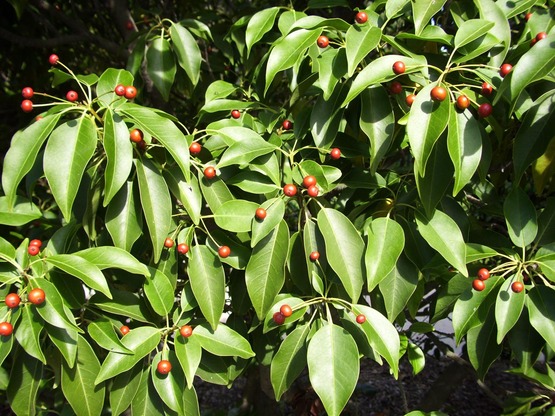 Longstalk holly is one of the most
attractive hollies with thornless, shiny, 1 to 3 inch long, dark green leaves
and interesting red, ¼ inch fruit that hangs on 1 ½ inch stems, which generally
persist from October into November when birds do not get them. It has a
graceful balance of dense foliage with an open structure over its height which
can reach 30 feet with a spread of 15 feet but generally is closer to 15 feet
tall in cultivation. Plant it in spring in decent, fertile, moist soils. It is
tolerant of less-than-ideal conditions but grows best in partial shade to
partial sun locations. Keep in mind that a male plant is needed to pollinate a
female one for fruit production. Hardy in zones 5-7.
|
Skimmia japonica
(Japanese Skimmia)
2007
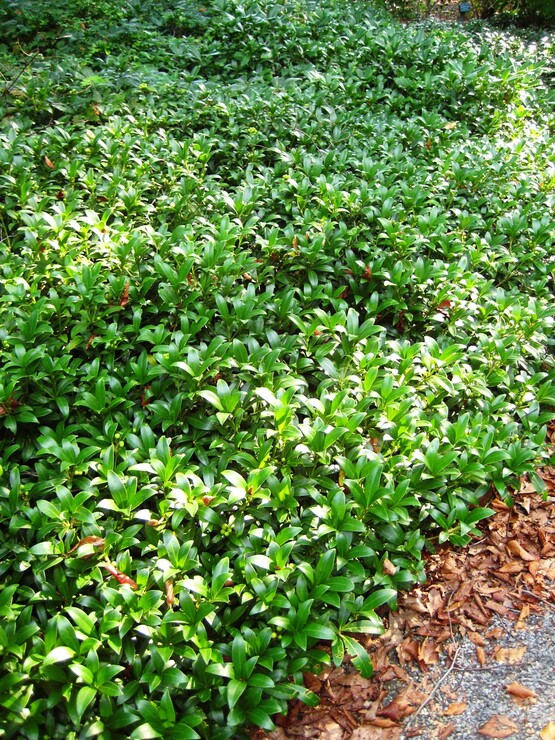 Japanese skimmia is a rounded and
dense evergreen shrub of about 3 feet by 4 feet for foundation and mixed
plantings and is nicely sized for small gardens. Plant it in moist, organic,
acidic soils in shade and part shade areas and protect it from winter sun and
wind. A male must be planted near up to 6 female plants to produce the
persistent bright red fruit in November, which lasts until spring. Crushed
leaves are fragrant. No major pest or disease issues pose a threat. Hardy in
zones 6-8.
|
Abelia grandiflora ‘Rose Creek’
(Glossy Abelia)
2007
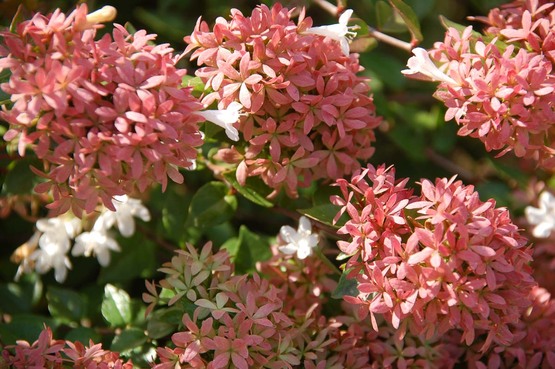 A slow-growing, dense cultivar, ‘Rose
Creek’ is a deciduous shrub with attractive, rosy foliage. It has light pink to
white flowers starting in July and terrific foliage color from September; both
lasting until a hard frost. It generally grows to 3 feet tall and should be cut
to the ground in late winter every 3-5 years. Use it in a mixed border, a
hedge, or even an interesting groundcover. Plant it in sun to part shade in
well-drained organic soils with good moisture during growth. Plants are
evergreen where protected. Hardy in zones 6-9.
|
Viburnum x burkwoodii ‘Conoy’
(Burkwood Viburnum)
2008
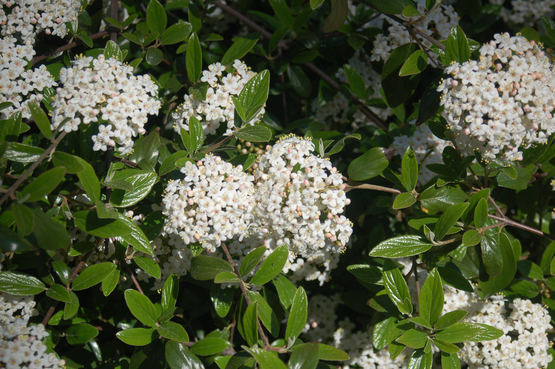 A terrific, pest-resistant, dwarf,
evergreen shrub, ‘Conoy’ has flat, creamy white fragrant May. It is dense and
rounded, growing to 4 feet tall and 7 feet wide. Grow it in sun to part shade
locations in well-drained, alkaline soil. Mature plants are well able to
withstand drought. The best fruiting, which is reddish-purple in color, for
birds occurs if it is planted in groups or as a hedge, but it is also a good
specimen or foundation planting. Keep in mind that pruning spent flowers will
prevent summer fruit displays. No major insect or disease problems pose a
threat. Hardy in zones 5-8.
|
Aesculus parviflora
(Bottlebrush Buckeye)
2009
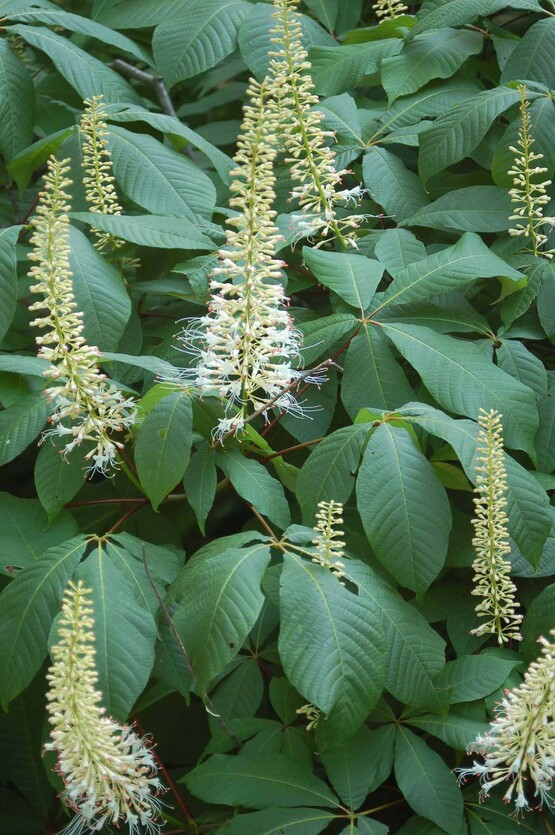 Bottlebrush buckeye is a native,
deer-resistant shrub that tolerates shade and deep shade. If sited in full sun,
ensure good moisture. It is intolerant of dry soils, particularly in the
earliest stages of its growth and earlyleaf drop may occur in extreme heat. It flowers well in both sun and
shade and the flowers, which attract ruby-throated hummingbirds, are very
fragrant. Foliage turns to yellow in the fall. Most of the time, pruning is not
needed. At a mature height and width of approximately 8 feet by 8 feet, give
this plant room to grow. Bottlebrush buckeye makes a divine lawn specimen or an
impressive border when planted enmasse. It faces no major pest or disease
issues. Hardy in zones 4-8.
|
Lonicera nitida ‘Lemon Beauty’ and 'Baggesen’s Gold’
(Boxleaf Honeysuckle)
2013
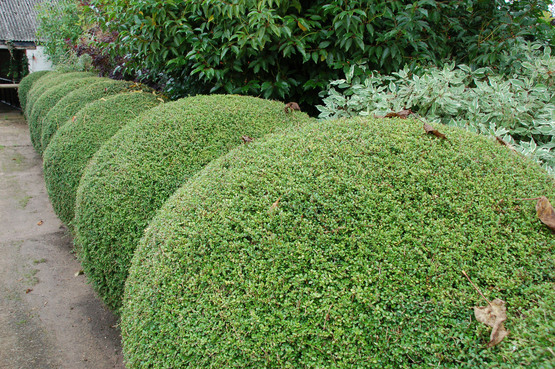 Boxleaf honeysuckle is a low-growing
evergreen shrub with small, glossy leaves and a spreading habit to 4 to 5 feet
tall and 4 to 6 feet wide. Plants can be pruned to form a dense hedge or low
screen. Boxleaf honeysuckle prefers well-drained, acidic soil and full sun or
partial shade. It is heat and drought-tolerant. It is also a good alternative
to boxwood. Plants may become semi-evergreen in harsh winters. ‘Baggesen’s
Gold’ is an upright variety with bright, golden-yellow foliage and ‘Lemon
Beauty’ offers fine, yellow, variegated foliage and a graceful growth habit.
Hardy in zones 7-9.
|
Camellia japonica April Series, C. x Winter Series
(Camellia)
2014
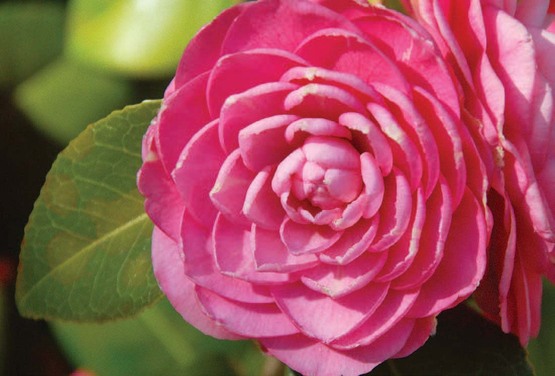 These durable, colorful evergreens
offer exquisite, glossy, dark green leaves year round and colorful flowers
ranging from pure white to deep pink and red at select times of the year. The
April Series offers flowers in April and May while the Winter Series blooms
from late October until the onset of cold weather in December. Camellias are
best planted in spring and prefer rich, acidic, well-drained soil and partial
shade. When siting, avoid planting on a southern exposure. Camellias are heat,
drought and pest-resistant and offer great texture and color throughout the
year. ‘Winter’s Star’, ‘Winter’s Joy’, ‘Winter’s Darling’, ‘April Kiss’, ‘April
Rose’ and ‘April Tryst’ are among some of the best new cultivars available.
Hardy in zones 6-9.
|
Ilex crenata ‘Soft Touch’
(Japanese Holly)
2014
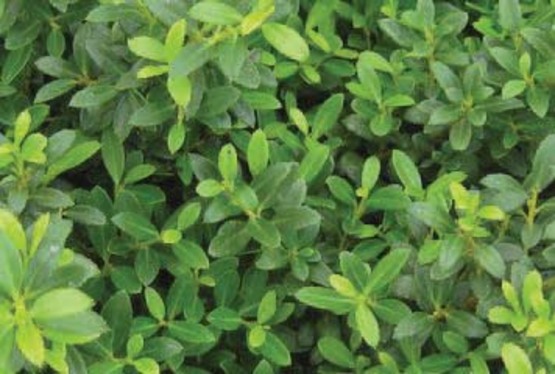 This semi-dwarf, Japanese holly has
fine, glossy, evergreen foliage that is softer to the touch than most other
cultivars. The dense habit to 2 to 3 feet tall and wide and dark foliage make
it a suitable replacement to boxwood as hedges, foundation plantings and low
screens. Well-drained soil is preferred and full sun or partial shade is best
for growing dense plants. Soft touch holly is drought, heat and pest-resistant,
making it a low-maintenance and durable alternative to boxwood, wintercreeper
(Euonymus fortunei) and other garden favorites. Hardy in zones 5-8.
|
Hydrangea paniculata ‘Limelight'
(Panicle Hydrangea)
2015
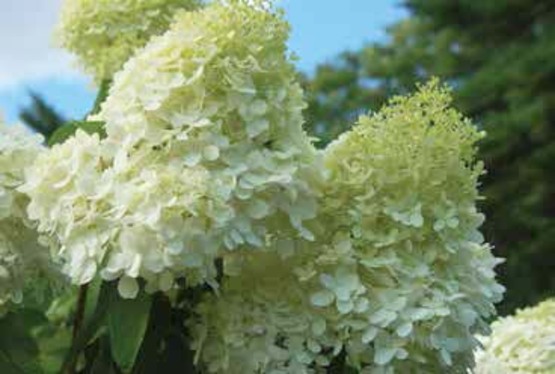 Limelight hydrangea is a deciduous
shrub much-loved for its strong upright form, winter hardiness and profuse
display of flowers throughout the season. The large, panicle flowers are borne
on new growth and change from hues of lime green to white and mature to a soft
pink. Planted as a hedge or singular planting in a mixed border, the effect in
bloom is dramatic. A shrub grows 6 to 10 inches tall and about 5 inches wide in
full or part sun with well-drained soil preferred. In spring, prune back to
strong lateral buds to maintain growth and vigor. Hardy in zones 3-8.
|
Aucuba japonica ‘Serratifolia'
(Serrated Japanese Aucuba)
2015
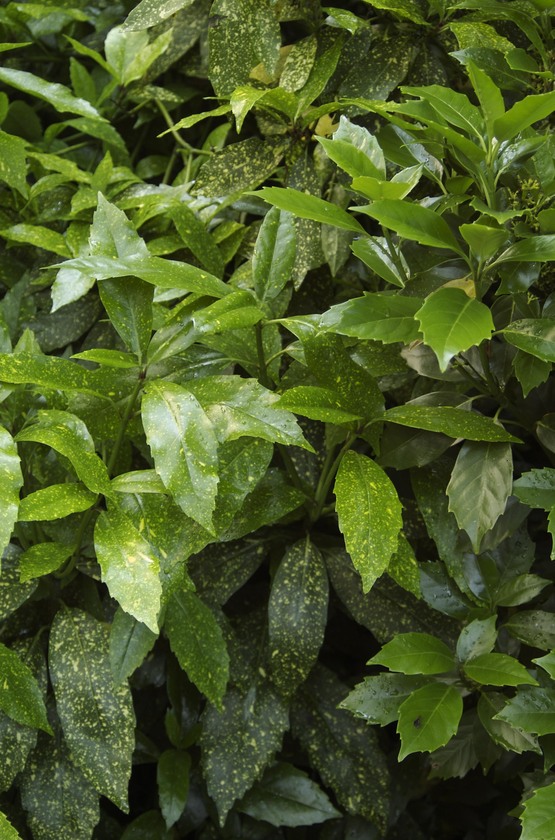 Serrated Japanese aucuba fills a niche
as one of the premier broadleaf evergreen shrubs for light to deep shade.
Foliage remains pristine through most of Long Island winters especially when
the plants are sited out of winter sun and wind. The shrub will grow 6 to 8
feet tall and functions well as a hedge, or as a component of the woodland
shrub border. Pruning is handled well and the species is moderately tolerant of
salt spray and poor soil as long as drainage is good. It is a suitable
alternative to Prunus laurocerasus ‘Schipkaensis’ without the foliage problems.
Hardy in zones 7-9.
|
Osmanthus heterophyllus ‘Goshiki'
(False Holly)
2017
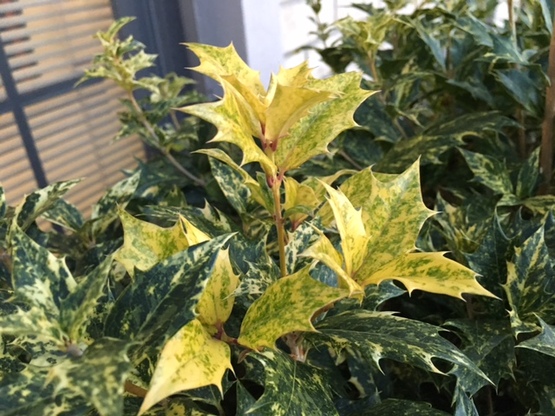 Holly olive is a broadleaf evergreen
shrub native to Japan and Taiwan and is sometimes mistaken for holly because of
its similar leaf shape. Its compact form makes it a great border plant, and
come fall, small yet fragrant flowers bloom on female plants. ‘Goshiki’ is an
outstanding cultivar growing to 5 feet high and 4 feet wide at maturity. It has
striking, soft swirls of rose, cream, white and other colors against the light
green leaf, especially vivid on new growth. It tolerates drought and clay
soils. Plant it in full sun to part shade. Hardy in zones 3-9.
|
Viburnum nudum ‘Winterthur’ and 'Brandywine’
(Smooth Witherod)
2018
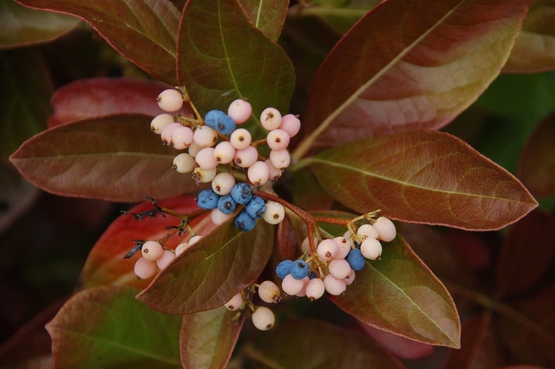 This is a shrub with aromatic white
flowers that appear in May to June, followed by clusters of berries that change
color from pink to black. Its glossy, dark green leaves are stunning. It’s
suitable for average, medium to wet, well-drained soil in full sun to part
shade and grows from 5 to 12 feet tall. The ‘Brandywine’ cultivar is more
compact at 5 to 6 feet tall, and stands out due to the intense colors of its
berries. ‘Winterthur’ is also a compact cultivar, but with glossier leaves. In
fall, these gorgeously colored shrubs change color from maroon or orange to
reddish-purple. Perfect for shrub borders, foundations, roadside plantings, or
low spots near ponds or streams. Less susceptible to viburnum leaf beetle than
other viburnum species. Hardy in zones 5-9.
|
Deutzia gracilis
(Slender Deutzia)
2019
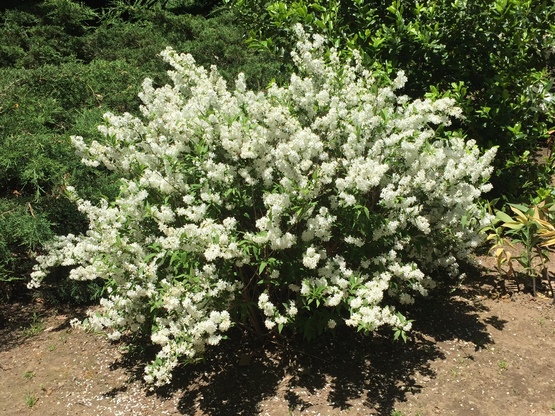 This deciduous plant adds elegance and
variety to the landscape with its mounded form and arching branches. Native to
Japan but well-suited for Long Island, slender deutzia thrives in full sun or
part shade in well-drained soil, and reaches a mature height of 2 to 4 feet. In
mid to late May, the shrub is covered in white bell-shaped flowers that bloom
from last year’s growth. Come fall, the slender ovate leaves change to yellows
and reds, with cultivar ‘Nikko’ turning a beautiful burgundy. Cultivar ‘Chardonnay
Pearl’ offers bright lime green leaves in spring and summer with red fall
color. Perfect for the compact garden or mass planting, there are several other
cultivars suitable for Long Island as well. Hardy in zones 5-8.
|
Ilex x ‘Rutzan’ Red Beauty
(Red Beauty® Holly)
2020
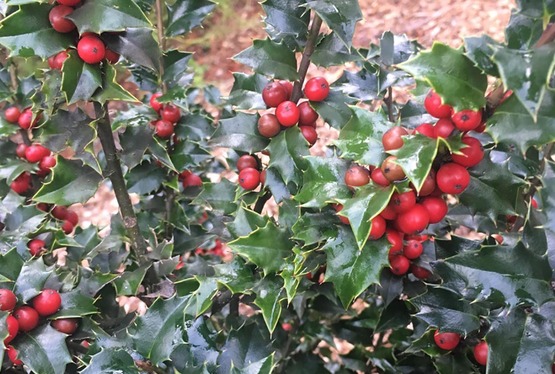 Red Beauty® holly is a hybrid holly
shrub introduced by Rutgers’ plant breeding program. It has fine, dark green
foliage, and produces berries abundantly year in and year out. ‘Red Beauty’
forms a conical shape, maturing to around 10 feet tall with a 5 to 6 foot
spread, which lends itself well for use in Long Island landscapes where other
upright broadleaf hollies grow too large. ‘Red Beauty’ will perform best in
full sun, but will tolerate partial shade, and as with most hollies prefers a
slightly acidic, moist, well-drained soil. It should also be noted that this
plant has few pest problems, and seems to be deer-resistant. Lastly, to ensure
good fruit set a male companion plant should be planted nearby; Ilex ‘Blue
Prince’ and Ilex ‘Blue Stallion’ are compatible. Hardy in zones 6-8.
|
Itea virginica
(Virginia Sweetspire)
2020
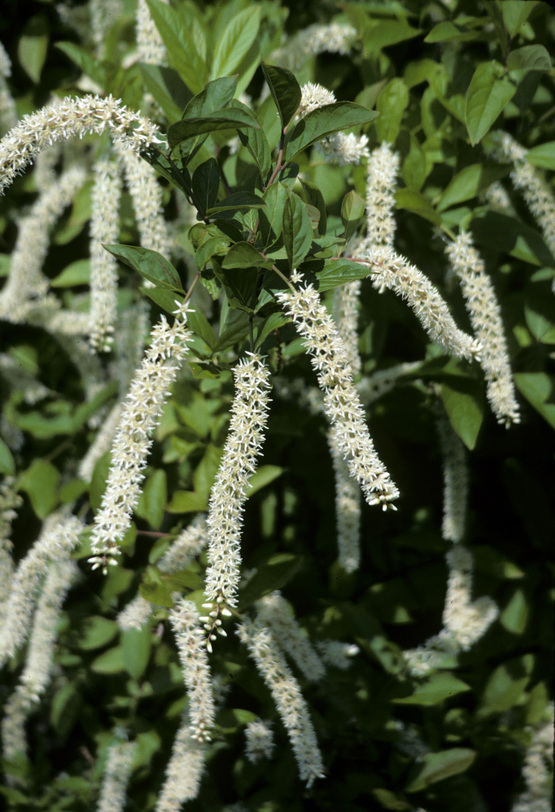 Native to southern parts of the U.S.
Virginia, sweetspire is a deciduous, flowering shrub that is appealing both for
its ornamental and habitat value. From late spring to early summer, sweetly
fragrant white flowers soil but stem tips and are highly attractive to
pollinators. For dramatic ornamental effect and to best provide cover for
wildlife, plant this mounding shrub in groups and give it room to grow, as it
spreads. In fall, its glossy green leaves turn shades of orange red to
burgundy. Several cultivars are available ranging in mature size from 6 by 6 feet
for ‘Henry’s Garnet’ to the more compact forms of ‘Scarlet Beauty’ and ‘Little
Henry’, which grow about 3 feet in height and 4 feet wide. The species can grow
as tall as 8 feet under ideal site conditions. This shrub is practically
trouble-free and is adaptable to full sun or shade, but grows best in acidic,
moist soils high in organic matter. Deer tend not to browse it. Hardy in zones
5-9.
|
Enkianthus campanulatus
(Redvein Enkianthus)
2021
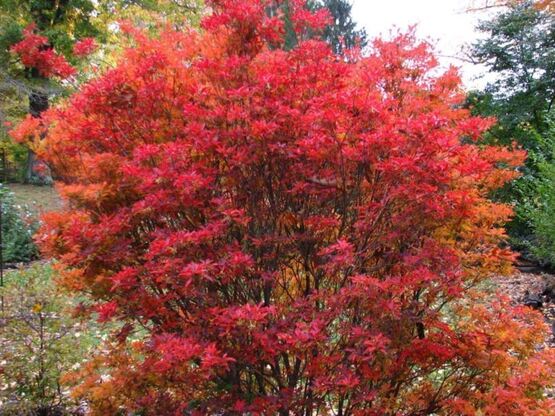 Native to Japan, this slow-growing,
deciduous shrub is a bright and colorful choice for your garden. Redvein
enkianthus blooms profusely beginning in May with bell-shaped flowers first
emerging cream and pink and maturing to a more prominent and vibrant rose color
by July. Come fall, the shrub is ablaze in orange and red leaves. Redvein
enkianthus has an upright, elegant form that rarely needs pruning, and reaches
a mature height of 8 feet by 6 feet. Best sited in a location with morning sun
and afternoon shade in acidic soil. Deer seldom browse Redvein enkianthus, but
they might taste the spring shoots. Scout for spider mites during hot summers.
Hardy in zones 4 through 7.
|
Rosa carolina,
R. palustris,
& R. virginiana
(Eastern Pasture Rose, Swamp Rose,
& Virginia Rose)
2021
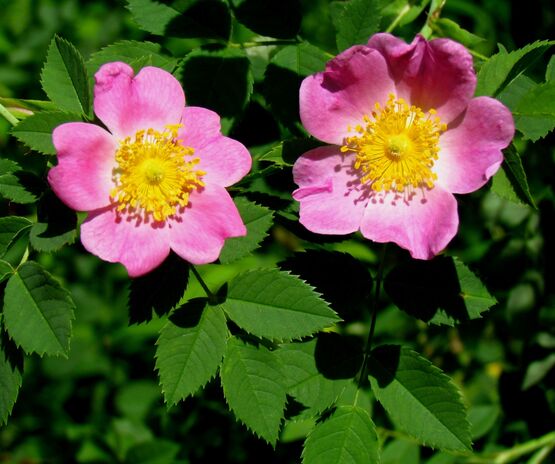 These three shrub roses have the
distinction of being native to Long Island. All have 5-petaled, pink flowers
with very showy, yellow stamens that start to bloom in late spring and after
pollination develop ornamental, red hips that shine come fall. Differences in
hip size and shape are the easiest way to distinguish between species that
otherwise appear very similar in size and form. Pasture rose forms a low mound,
whereas the swamp and Virginia rose have more of an upright habit. All form
colonies and will spread widely. Adaptable to various conditions including salt
spray. Site in full sun for best flower production. A great choice for
attracting pollinators and supporting wildlife. Hardy to zones 4 through 9.
|
Indigofera ambylantha
(Indigofera, Indigo)
2022
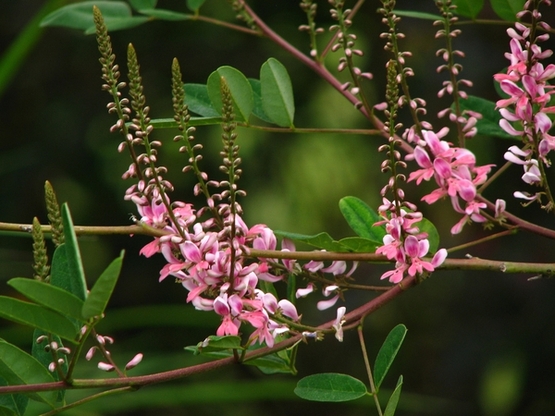 Indigofera amblyantha is a finely
textured, deciduous, spreading shrub native to central to south central China.
This vigorous grower will typically grow to 4 feet tall and at least as wide.
Its best attributes are its masses of attractive pale lilac to pink, pea-shaped
flowers in narrow vertical racemes (2-5 inches long) and soft, ferny foliage.
Flowers will start in May and continue through September and October if the
weather is mild. This tough plant will tolerate various types of soils and
light but its best in well-drained, moist soil and full sun or partial shade.
It is drought-tolerant once established and will attract many pollinators to
the garden. Ideal in a mass planting and an excellent companion plant in an
herbaceous border. Hardy from zones 6 to 8.
|
Ilex verticillata
(Winterberry)
2023
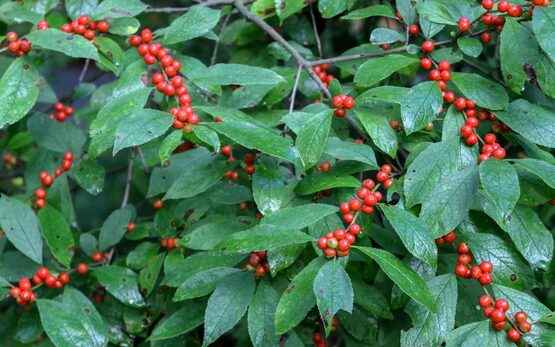 Ilex verticillata (Winterberry Holly)
is a deciduous shrub known for its striking bright red berries that persist
into winter, providing visual interest and food for wildlife. It typically
grows 6–10 feet tall and wide, with an upright, multi-stemmed habit.
Winterberry thrives in moist, acidic soils and prefers full sun to partial
shade, though berry production is best in full sun. It is adaptable to wet
conditions, making it ideal for rain gardens and naturalized areas. Common
cultivars include ‘Winter Red’, ‘Maryland Beauty’, and ‘Red Sprite’(Dwarf).
It’s important to note that winterberry is dioecious, meaning both male and
female plants are required for fruit set. A nearby male pollinator, such as
Ilex verticillata ‘Jim Dandy’ (early blooming) or ‘Southern Gentleman’ (late
blooming), is essential for successful berry production on female plants. One
male can typically pollinate multiple females. Hardy in zones 3-9.
|
Vitex agnus-castus
(Chaste Tree)
2024
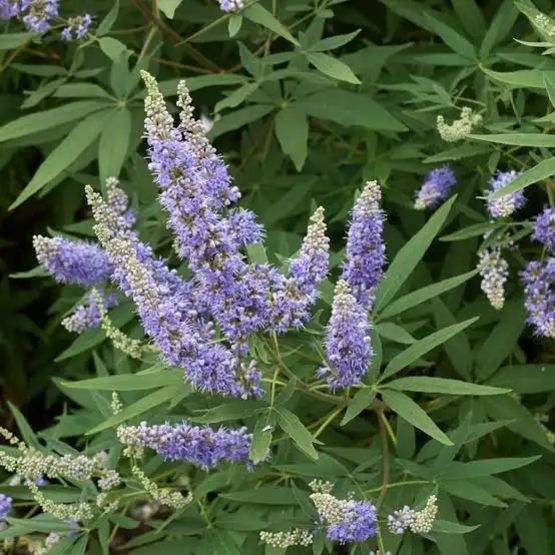 Native to the Mediterranean and
western Asia, Chaste Tree is a deciduous shrub with aromatic grayish-green
leaves and spikes of fragrant lavender-blue flowers. Grows 8 to 10 feet tall
and 5 to 8 feet wide. Flowers bloom profusely from July to September and may
attract butterflies. It prefers full sun and well-drained soil. Drought
tolerant once established, generally pest-free. Hardy in zones 6-9.
|
Callicarpa americana
(American Beautyberry)
2025
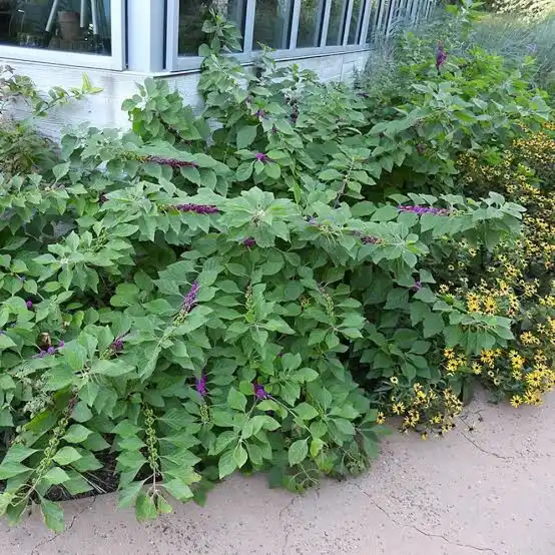 Native to the southeastern United
States, beautyberry is a deciduous shrub with arching branches and bright green
leaves, growing to 3 to 6 feet tall and wide. From June to August, expect small
lavender flowers. In fall, this plant grows striking clusters of iridescent
purple berries that attract birds. Prefers full to partial sun and moist,
well-drained soils. Since the shrub blooms on new wood, it is a good candidate
for rejuvenation pruning and can be cut down to within 6 inches of the ground
without sacrificing flower or fruit production the following season. Regular
pruning will keep the shrub form more attractive. Pest-resistant. Hardy in
zones 7-11.
|
Edgeworthia chrysantha
(Paperbush)
2027
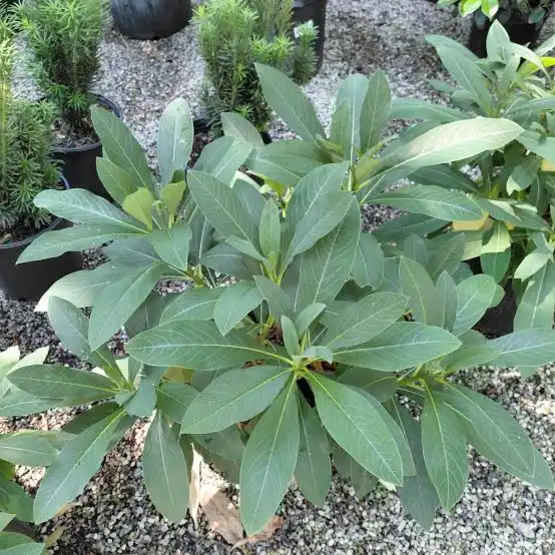 Paperbush is a deciduous shrub
with broad, green leaves that have an ornamental whitish, silvery undersurface.
This specimen plant will grow to 6 feet in height and from 2 – 15 feet in
width; meaning, after flowering, it may need-to-have its outer canes regularly pruned
to the base in late winter to keep its width in-check. Paperbush truly shines
during the dormant season when the silvery, fuzzy tight inflorescences catch
the light against the smooth gray, thickened stems. The showy cream-to-yellow
bloom clusters start flowering in early March and go through early spring. Flowers produce a strong and pleasant
fragrance. Paperbush appreciates but does not require rich and well-drained
soil to thrive and is heat- and deer-resistant. Common garden applications
include use as a border plant or centerpiece. Hardy in zones 6-10.
|